Best Blenders for Smoothies and Everyday Use
A good blender can make smoothies, shakes, soups, sauces, frozen drinks, and everyday food preparation much easier.
But choosing the right blender is not always simple. There are full-size blenders, personal blenders, immersion blenders, high-performance models, and multifunction machines with different features and price points.
The best blender for home use depends on what you make most often, how many people you are serving, how much counter space you have, how frequently you use the machine, and how much you are willing to spend.
For smoothies in particular, blending performance matters. A blender needs to handle ingredients such as frozen fruit, ice, leafy greens, seeds, and thick mixtures without leaving large chunks or fibrous pieces behind.
What Makes a Good Blender?
A good blender should do more than simply spin its blades quickly.
For everyday home use, look for a blender that offers:
- Strong and consistent blending performance
- A well-designed blade and jar system
- Enough capacity for your typical recipes
- Easy-to-use controls
- Convenient speed settings
- Good performance with frozen ingredients
- Easy cleaning
- Durable construction
- Reasonable noise levels
- A size that fits your kitchen
Motor power is useful, but wattage alone does not determine blending quality. Jar shape, blade design, ingredient movement, and overall construction also influence how smoothly a blender performs.
For additional guidance on comparing blender performance and features, check this blender buying guide from Consumer Reports.
Types of Blenders for Home Use
Before choosing a specific model, decide which type fits your routine.

1. Full-Size Blenders
Full-size countertop blenders are the most versatile option for many households.
They usually have larger containers and stronger motors than personal blenders, making them suitable for:
- Family-size smoothies
- Frozen drinks
- Soups
- Sauces
- Nut butters
- Large batches
- Ice crushing
They are a good choice if you want one blender that can handle many different kitchen tasks.
The downside is that full-size blenders usually take more counter and storage space.
2. Personal Blenders
Personal blenders are designed primarily for single servings.
They are useful if you:
- Usually make one smoothie at a time
- Want a compact appliance
- Have limited counter space
- Want a blending cup you can take with you
- Do not need large batches
Many personal blenders use the blending container as a drinking or travel cup.
Personal blenders can be especially convenient for quick breakfasts. If smoothies are a regular part of your morning routine, you can also explore these high-protein smoothie recipes for additional ideas.
3. Immersion Blenders
Immersion blenders are handheld appliances with blades at the end of a shaft.
Instead of pouring ingredients into a separate jar, you place the blender directly into a container.
They are particularly useful for:
- Soups
- Sauces
- Purees
- Small quantities
- Quick food preparation
They can be convenient, but they are not usually the first choice for thick smoothies or large amounts of frozen fruit.
4. High-Performance Blenders
High-performance blenders are designed for demanding tasks.
They typically offer:
- Powerful motors
- Strong blending performance
- Better handling of fibrous ingredients
- Improved ice crushing
- More durable components
- More advanced controls
These machines can be excellent for people who make smoothies every day or regularly prepare difficult ingredients such as frozen fruit, leafy greens, nuts, seeds, and thick mixtures.
The main disadvantage is price.
A premium blender can cost several hundred dollars, so it is important to make sure the additional performance is useful for your routine.
How to Choose the Best Blender for Your Home
The right blender should match the way you actually use it.
Here are the most important factors to consider.
1. Consider What You Blend Most Often
Start with the simplest question:
What do you normally make with your blender?
If you mainly make fruit smoothies, you may not need an extremely powerful premium machine.
If you regularly blend frozen fruit, ice, leafy greens, nuts, seeds, soups, and thick mixtures, investing in a more capable blender can make sense.
For smoothie lovers, pay particular attention to how well the blender handles:
- Frozen berries
- Bananas
- Mango
- Pineapple
- Ice
- Spinach
- Kale
- Protein powder
- Nut butters
- Seeds
A blender that performs well with soft fruit may not necessarily perform equally well with fibrous greens or hard frozen ingredients.
Consumer Reports evaluates blenders using practical tests that include icy drinks, ice crushing, and puréeing. These tests can help show how effectively a blender handles different ingredients.

2. Look at Motor Power
Motor power is one of the most commonly advertised blender specifications.
You may see wattage, horsepower, or both.
A more powerful motor can be useful for demanding ingredients, but wattage should not be the only thing you consider.
A blender with a powerful motor can still perform poorly if the jar shape and blade system do not move ingredients effectively.
For everyday smoothies, look for a blender with enough power to handle your normal ingredients without repeatedly stopping to stir or add excessive liquid.
If you regularly blend frozen ingredients, ice, or fibrous vegetables, a higher-performance blender may be worth considering.
3. Jar Capacity Matters
Blender containers come in different sizes.
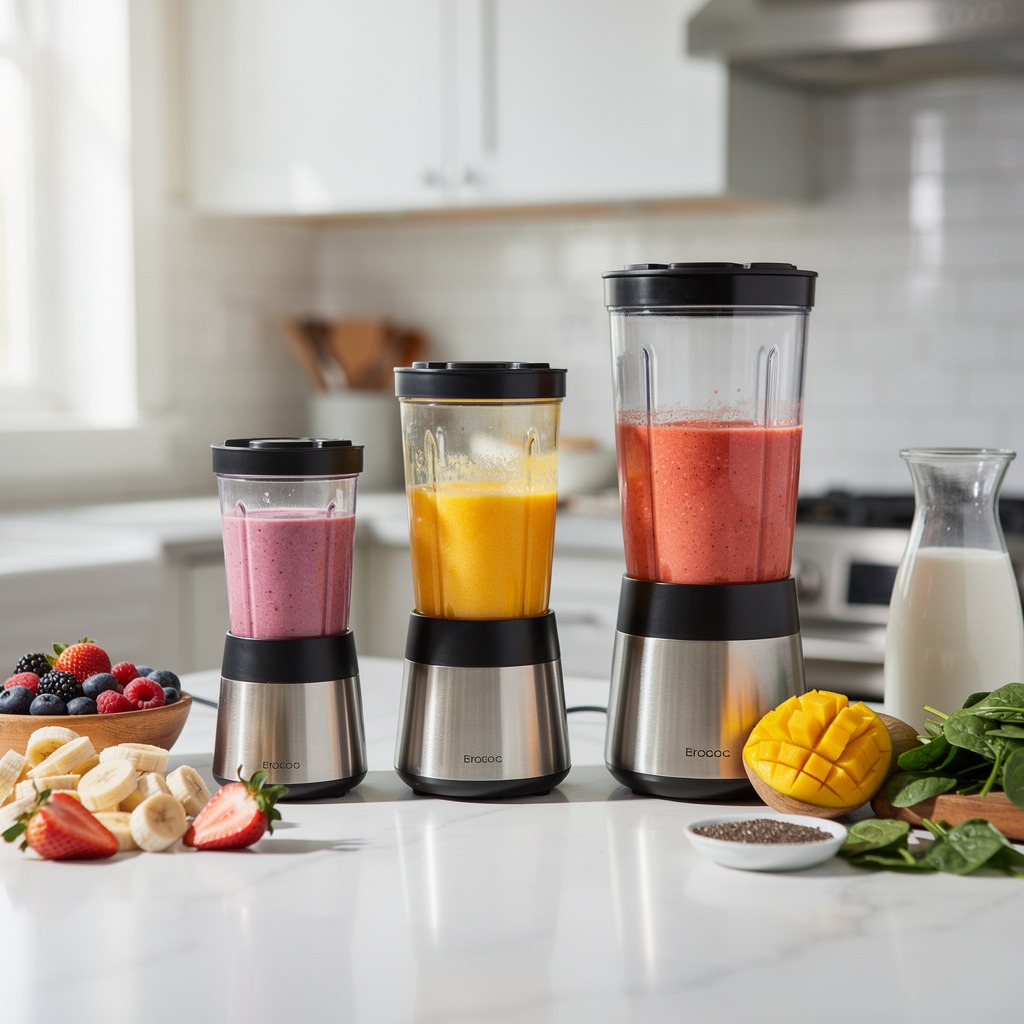
Small Capacity
Good for:
- One person
- Personal smoothies
- Small servings
- Limited kitchens
Medium Capacity
Good for:
- Couples
- Small families
- Everyday smoothies
- Moderate food preparation
Large Capacity
Good for:
- Families
- Multiple smoothies
- Large batches
- Meal preparation
Don’t automatically choose the largest jar.
A large container can take more storage space and may not work as efficiently when you are blending very small quantities.
Choose a capacity that matches the amount you normally prepare.
4. Jar Material: Plastic vs. Glass
The container material affects weight, durability, appearance, and everyday convenience.
Plastic Containers
Plastic jars are common because they are relatively lightweight and less likely to shatter.
They can be easier to handle when making large batches.
However, some plastic containers can absorb odors or develop stains over time.
A wide opening can also make a blender easier to fill and clean.
Glass Containers
Glass can resist odors and staining and may feel more premium.
However, glass containers are heavier and can break if dropped.
For everyday convenience, many people prefer a durable plastic container.
5. Blade Design
The blades are obviously important, but more blades do not automatically mean better blending.
The overall blade system needs to work effectively with the shape of the container.
A good blender should create enough movement to pull ingredients toward the blades rather than leaving food stuck around the sides.
This is particularly important when making thick smoothies.
A blender that forces you to stop frequently and scrape the sides can be frustrating, even if it has a powerful motor.
6. Speed Settings
Some blenders offer only one or two speeds, while others provide multiple speed levels.
For basic smoothies, you may not need a large number of settings.
Multiple speeds can be useful if you also want to make:
- Soups
- Sauces
- Purees
- Nut butters
- Frozen desserts
- Smoothies with different textures
A variable-speed control can give you more control over texture.
However, don’t pay extra for dozens of settings if you normally press one button and walk away.
7. Preset Programs
Premium blenders sometimes include automatic programs for specific recipes.
Common presets include:
- Smoothie
- Frozen drink
- Soup
- Ice crush
- Puree
- Self-cleaning
Presets can be convenient because the blender automatically controls speed and blending time.
But they are not essential.
If you are comfortable controlling the blender manually, a simpler model may provide better value.
8. Frozen Fruit and Ice Performance
If smoothies are your main reason for buying a blender, this is one of the most important factors.
Frozen fruit and ice are much harder to process than soft ingredients.
A blender should be able to break down frozen ingredients without leaving large chunks.
When comparing models, look for independent testing that evaluates ice crushing and smoothie consistency rather than relying only on manufacturer claims.
Consumer Reports provides additional information about blender testing and smoothie performance.
9. Smoothies With Leafy Greens
Green smoothies can be more challenging than simple fruit smoothies.
Ingredients such as spinach and kale contain fibers that can remain visible if the blender does not have enough blending performance.
If you regularly make green smoothies, look for a machine that performs well with fibrous ingredients.
A good blender should break down leafy greens thoroughly while maintaining enough circulation inside the jar to prevent ingredients from becoming trapped around the sides.
10. Ease of Cleaning
Cleaning is one of the most important features for everyday use.
A blender that is difficult to clean may end up sitting unused in your cabinet.
Look for:
- Removable components
- Easy-access blade areas
- Dishwasher-safe parts when appropriate
- Wide-mouth containers
- Simple controls
- Self-cleaning programs when useful
If you regularly make thick smoothies or nut butters, easy cleaning becomes even more important.
Clean the blender soon after use whenever possible. Dried fruit, protein powder, nut butter, and other sticky ingredients become much harder to remove once they have dried.
11. Noise Level
Blenders can be surprisingly loud.
This may not matter if you only use one for a few seconds, but frequent smoothie makers may appreciate a quieter machine.
Noise can be particularly important if:
- You make smoothies early in the morning
- You live in an apartment
- Your kitchen is close to bedrooms
- You use the blender frequently
Noise is also one of the factors considered in independent blender testing, so it can be worth checking reviews before buying.
12. Counter Space Matters
Before buying a blender, measure your available kitchen space.
Check:
- Width
- Depth
- Height
- Jar height
- Lid clearance
- Storage space
Some high-performance blenders have tall containers that may not fit comfortably underneath kitchen cabinets.
A blender that is easy to access is more likely to become part of your everyday routine.
13. Do You Need a Personal Cup?
Some full-size blenders come with additional personal-size containers.
This can be useful if one person wants a smoothie while another wants to prepare a larger batch.
It can also reduce the need to purchase a separate personal blender.
If you regularly make single-serving smoothies, a blender with both full-size and personal containers can provide a good balance of versatility and convenience.
14. How Much Should You Spend?
You do not necessarily need an expensive blender for everyday smoothies.
Budget models can handle simple tasks, while mid-range and premium models may provide stronger performance, better construction, more controls, and additional accessories.
Budget Blenders
Best for:
- Occasional smoothies
- Soft fruits
- Protein shakes
- Small households
- Basic blending
Mid-Range Blenders
Often provide a good balance of:
- Motor power
- Better blending performance
- Larger containers
- Multiple speeds
- Better construction
- Additional accessories
Premium Blenders
May include:
- High-performance motors
- Variable speed control
- Advanced programs
- Durable containers
- Better performance with fibrous ingredients
- Personal cups
- Self-cleaning functions
- Longer warranties
Only pay for premium features if you will actually use them.
Blender Features Worth Paying For
Some features can genuinely improve everyday use.
Worth Considering
- Strong blending performance
- Variable speed control
- Durable container
- Easy cleaning
- Personal-size cup
- Useful preset programs
- Good ice-crushing ability
- Effective performance with frozen fruit
- Automatic shutoff
- Long warranty
Features You May Not Need
- Oversized touchscreens
- Wi-Fi connectivity
- Complicated smart features
- Too many presets
- Decorative premium finishes
- Features you will rarely use
A blender should make your kitchen routine easier, not more complicated.
Common Blender Buying Mistakes
Buying Based Only on Wattage
A high wattage number does not automatically guarantee a smooth smoothie.
Blade design, container shape, ingredient movement, and overall construction also matter.
Buying More Blender Than You Need
If you make one simple smoothie every few days, you may not need a premium high-performance machine.
Ignoring Jar Size
A huge container can be inconvenient for small servings.
Forgetting About Noise
A very loud blender can become annoying if you use it every morning.
Ignoring Cleaning
If the blender is difficult to clean, you may stop using it.
Buying Too Many Features
More buttons do not necessarily mean better smoothies.
Forgetting Counter Space
Always measure the blender before buying it.
Choosing the Cheapest Option for Heavy Use
A basic blender may be perfectly fine for occasional smoothies, but frequent users may benefit from investing in better performance and durability.
Blender Buying Checklist
Before purchasing a blender, ask yourself:
☐ What will I make most often?
☐ Do I mainly make smoothies?
☐ Will I use frozen fruit or ice?
☐ Do I make green smoothies?
☐ How many people will I serve?
☐ Do I need a personal-size cup?
☐ How large should the container be?
☐ Is the blender easy to clean?
☐ Is the noise level acceptable?
☐ Will it fit comfortably on my countertop?
☐ Do I need multiple speeds?
☐ Do I need automatic programs?
☐ Is the motor powerful enough for my ingredients?
☐ Is the price reasonable for the features I will actually use?
Best Blender for Different Types of Home Users
Best for Daily Smoothies
A full-size blender with strong blending performance, a durable container, and good frozen-fruit performance is a practical choice for people who make smoothies every day.
Best for One Person
A personal blender can save counter space and make single-serving smoothies quickly.
Best for Families
A full-size blender with a larger container is more practical when you regularly prepare multiple servings.
Best for Green Smoothies
Look for a blender that performs well with fibrous ingredients such as leafy greens.
Best for Frozen Drinks
Choose a blender with strong ice-crushing and frozen-ingredient performance.
Best for Convenience
A blender with preset programs, easy cleaning, and a personal cup can simplify your routine.
Best for Versatility
A high-performance full-size blender can be useful if you want one appliance for smoothies, soups, sauces, frozen drinks, and other demanding recipes.
Blender vs. Food Processor
A blender and food processor are not interchangeable.
Blenders are particularly useful for:
- Smoothies
- Soups
- Purees
- Frozen drinks
- Liquid-based recipes
- Crushing ice
Food processors are generally better suited to tasks such as slicing, shredding, chopping, and processing solid ingredients.
If you are unsure which appliance you need, this blender and food processor comparison can help explain the main differences.
If smoothies are your priority, a blender is usually the better choice.
How to Make Better Smoothies With Your Blender
Even the best blender cannot compensate for poor preparation.
For better smoothies:
- Use ripe fresh fruit when appropriate
- Use frozen fruit for a colder, thicker texture
- Add enough liquid to help ingredients circulate
- Cut large ingredients into smaller pieces
- Add ingredients in an order that helps the blades reach them
- Avoid overfilling the container
- Use the appropriate speed for the recipe
- Stop and scrape the sides when necessary
- Clean the blender immediately after use
A simple smoothie might combine fruit, yogurt or milk, a liquid base, and optional ingredients such as protein powder, nut butter, seeds, or leafy greens.
If you’re looking for more breakfast ideas to use with your new blender, these easy high-protein breakfast recipes can provide additional inspiration.
The goal is to create enough liquid and movement for the ingredients to circulate efficiently.
How to Clean a Blender
Cleaning your blender after every use can help prevent dried ingredients and odors.
For a quick cleanup:
- Empty the container.
- Rinse it with warm water.
- Add a small amount of dish soap and warm water.
- Run the blender briefly if the manufacturer permits this method.
- Rinse thoroughly.
- Allow removable components to dry completely.
Always follow the manufacturer’s cleaning instructions, especially around the blade assembly and motor base.
If your blender has a self-cleaning program, it can make routine maintenance easier, but it should not replace proper cleaning when ingredients become stuck around the blades or seals.
Frequently Asked Questions
What is the best blender for smoothies?
The best blender for smoothies is one that can consistently produce a smooth texture while handling your usual ingredients, including frozen fruit, ice, and leafy greens.
A powerful motor helps, but jar design, blades, and ingredient circulation are also important.
How much power should a blender have for smoothies?
There is no single wattage number that guarantees good smoothie performance.
For basic smoothies, a modest blender may be enough. If you regularly use ice, frozen fruit, or fibrous greens, a more powerful blender can provide better performance.
Consider the entire design rather than choosing based only on wattage.
Is a personal blender better for smoothies?
A personal blender can be excellent for single-serving smoothies.
It is particularly convenient for one person and often takes less counter space.
However, a full-size blender is more versatile if you make multiple servings or want to prepare soups, sauces, frozen drinks, and other recipes.
Are expensive blenders worth it?
They can be worth it for frequent users.
Premium blenders may offer better performance, durability, controls, and versatility.
But you do not need to spend hundreds of dollars to make a good smoothie. Compare actual performance and features rather than assuming that the most expensive blender is automatically the best.
Is glass or plastic better for a blender jar?
Plastic is usually lighter and less likely to break.
Glass can resist odors and stains but is heavier and more fragile.
For everyday home use, a durable plastic container is often the more practical option.
Can a blender crush ice?
Many blenders can crush ice, but performance varies considerably.
If you frequently make frozen drinks or smoothies with ice, look for a blender with strong ice-crushing performance rather than assuming every high-wattage machine will perform equally well.
Can I use a blender for hot soup?
Only if the blender is specifically designed for hot ingredients.
Always follow the manufacturer’s instructions because hot liquids can create pressure inside a sealed blender container.
How long should a blender last?
Lifespan depends on construction, usage frequency, maintenance, and the specific model.
Regular cleaning, avoiding overloading, and following the manufacturer’s instructions can help extend the life of the appliance.
Final Thoughts
The best blender for smoothies and everyday use is the one that matches your ingredients, serving size, kitchen space, and daily routine.
For most households, a good full-size blender provides the best balance of versatility and performance.
Personal blenders are excellent for single-serving smoothies and small kitchens, while high-performance models make more sense for people who regularly blend frozen fruit, ice, leafy greens, nut butters, soups, and other demanding ingredients.
When comparing models, don’t focus only on wattage or the number of features. Pay attention to actual blending performance, container design, cleaning convenience, noise, durability, and the types of ingredients you use most often.
Independent testing can also be useful when comparing blenders because it provides information beyond manufacturer specifications.
Before buying, think about what you actually blend, how often you use your blender, how many servings you normally prepare, and how much counter space you have.
A well-chosen blender can make smoothies faster, simplify everyday food preparation, and become one of the most useful appliances in your kitchen.