
Essential Cooking Gear for a Weekend Camping Trip
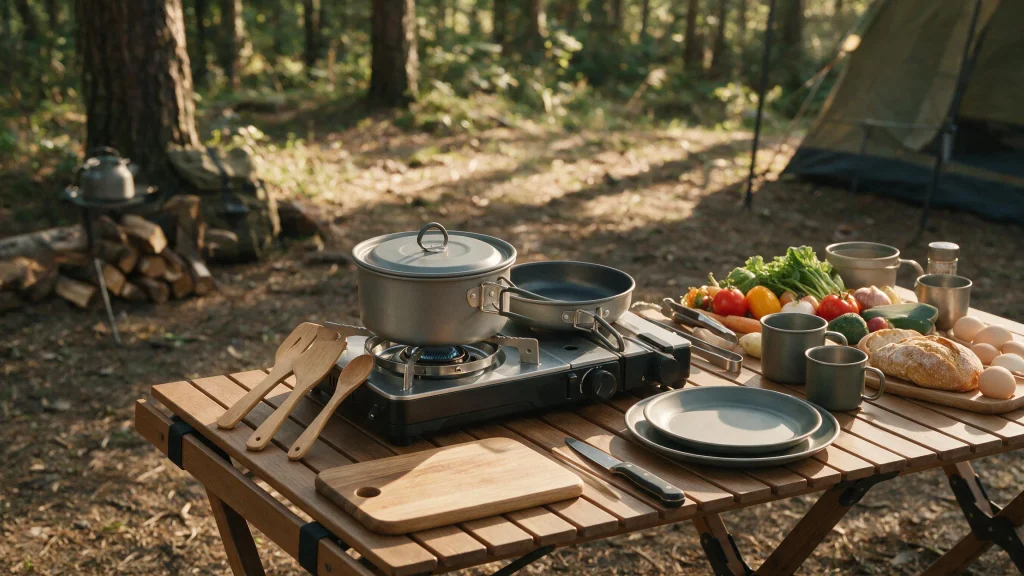
A weekend camping trip does not require a full kitchen, but having the right cooking gear can make outdoor meals much easier and more enjoyable.
The key is to bring equipment that is practical, compact, durable, and versatile enough to handle the meals you actually plan to prepare. Whether you are camping with a partner, family, or a small group of friends, a simple outdoor kitchen can be enough to prepare breakfast, lunch, dinner, and hot drinks.
In this guide, we will cover the essential cooking gear for a weekend camping trip, including cookware, cooking utensils, food preparation tools, cleanup supplies, and a few optional items that can make campsite cooking more convenient.
What Cooking Gear Do You Need for a Weekend Camping Trip?
For a typical weekend trip, you do not need to pack every kitchen tool you own.
A basic camping kitchen can include:
- Camping stove or cooking system
- Cooking pot
- Frying pan
- Cooking spoon
- Spatula
- Tongs
- Knife
- Cutting board
- Plates and bowls
- Cups or mugs
- Spork or eating utensils
- Cooler or food storage container
- Dishwashing supplies
- Water container
The exact equipment depends on your camping style and menu.
If you are preparing simple one-pot meals, you can keep your gear very small. If you plan to cook pancakes, grilled meat, pasta, or multiple dishes, you will need a few additional tools.
For more ideas about cookware, check out our guide to Best Camping Cookware for Outdoor Cooking.

1. Camping Stove
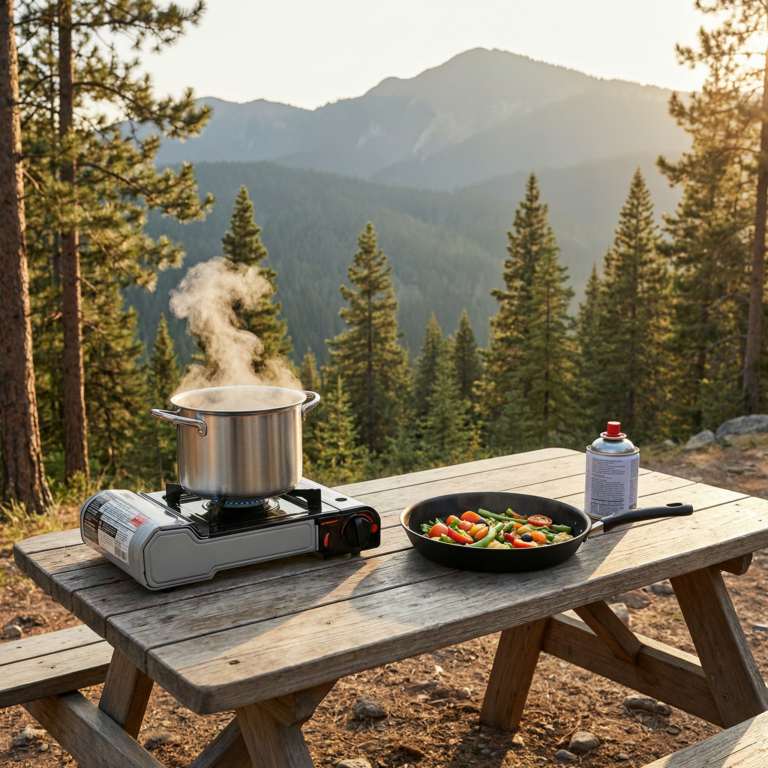
A reliable camping stove is one of the most important pieces of cooking equipment for a weekend trip.
A portable stove gives you a controlled cooking surface and can be much more convenient than relying entirely on a campfire.
Depending on your camping setup, you may choose:
- Single-burner stove
- Two-burner camping stove
- Backpacking stove
- Portable gas stove
A single burner can be enough for simple meals for one or two people.
For families or groups, a two-burner stove can make cooking easier because you can prepare two foods at the same time.
Before your trip, make sure your stove is compatible with its fuel source and test your equipment at home.
2. Camping Cooking Pot
A cooking pot is one of the most versatile pieces of camping gear.
You can use it for:
- Pasta
- Rice
- Soup
- Oatmeal
- Chili
- Stews
- Boiling water
- One-pot meals
For a weekend trip, one medium-sized pot can cover a surprisingly large number of meals.
A pot with a lid is particularly useful because it helps retain heat and can make cooking more efficient.
If you are traveling by car, you can choose a larger pot. For backpacking, a compact lightweight pot is usually a better choice.
3. Camping Frying Pan
A frying pan is useful if your weekend menu includes breakfast foods or meals that need direct frying.
Use it for:
- Eggs
- Pancakes
- Bacon
- Burgers
- Vegetables
- Fish
- Grilled sandwiches
If you want to reduce the amount of gear you carry, look for a camping cookware set where the frying pan can also function as a pot lid.
That gives you two cooking functions without requiring two large pieces of equipment.
4. Portable Cooking Utensils
A few compact cooking utensils can make a major difference when preparing food outdoors.
Useful options include:
- Cooking spoon
- Spatula
- Tongs
- Serving spoon
- Ladle
You do not necessarily need all of them.
For a simple weekend trip, a cooking spoon, spatula, and tongs can handle most meals.
For more information, see our guide to Best Portable Cooking Utensils for Camping.
Choose utensils with compact or folding designs when possible, especially if storage space is limited.
5. Camping Knife
A good knife is essential for food preparation.
You can use one reliable knife to:
- Cut vegetables
- Slice fruit
- Prepare bread
- Cut cheese
- Prepare meat
- Handle general food preparation
You usually do not need a complete knife set for a weekend camping trip.
A medium-sized multipurpose kitchen knife can handle most tasks.
Always store sharp knives safely and use a protective cover when transporting them.
6. Compact Cutting Board
A cutting board gives you a clean and stable surface for preparing ingredients.
Look for one that is:
- Lightweight
- Durable
- Compact
- Easy to clean
- Easy to store
Flexible cutting boards can be especially convenient because they take up very little room.
If you are preparing raw meat, use appropriate food-safety practices and clean the cutting board and utensils thoroughly before using them for other foods.
The USDA recommends keeping raw meat and poultry separate from other foods and using clean preparation surfaces and utensils while camping. USDA Camping Food Safety Guide
7. Plates, Bowls, and Eating Utensils
Cooking gear is only part of a camping kitchen.
You also need something to eat from.
For a weekend trip, consider bringing:
- One plate per person
- One bowl per person
- One spork or fork
- One spoon
- One cup or mug
Reusable camping dishes are generally more practical than disposable alternatives because they can be washed and used again.
If you want to save space, choose stackable plates and bowls.
8. Camping Mug
A durable camping mug is useful for morning coffee, tea, hot chocolate, and other drinks.
A good camping mug should be:
- Lightweight
- Durable
- Easy to clean
- Comfortable to hold
- Easy to pack
For small camping setups, a mug that fits inside your cooking pot can help save space.
If coffee is an important part of your weekend routine, you can also check our guide to Best Coffee Makers for Home Use for ideas about different coffee-making methods.
9. Cooler or Food Storage Container
Keeping perishable food at a safe temperature is one of the most important parts of campsite cooking.
A good cooler can be used to store:
- Meat
- Eggs
- Cheese
- Dairy products
- Fresh vegetables
- Prepared ingredients
- Drinks
Pack your cooler carefully and keep it closed as much as possible.
The USDA recommends keeping perishable foods cold during camping and using a cooler with sufficient ice or frozen gel packs. USDA Food Safety While Hiking or Camping
For foods that do not require refrigeration, shelf-stable ingredients can reduce the amount of cooler space you need.
10. Water Container
Clean water is essential for both cooking and cleaning.
You may need water for:
- Drinking
- Boiling pasta
- Making coffee
- Washing vegetables
- Cleaning cookware
- Washing hands
Bring enough safe water for your trip, especially if your campsite does not have a reliable water supply.
Do not assume that water from a natural lake, river, or stream is safe to drink or use for cooking without appropriate treatment.
11. Food Storage Containers
Reusable food containers can make meal preparation much easier.
You can prepare ingredients at home and store them in separate containers before leaving.
For example:
- Chopped vegetables
- Cooked rice
- Marinated meat
- Pancake mix
- Sauces
- Snacks
This can reduce preparation time at the campsite and also reduce the number of ingredients you need to carry separately.
Choose containers that stack easily and have secure lids.
12. Measuring and Preparation Tools
You may not need full-size measuring cups and spoons for a weekend trip.
However, they can be useful if you are preparing recipes that require specific quantities.
A better approach for camping is often to measure ingredients at home.
You can pre-measure:
- Spices
- Flour
- Pancake mix
- Rice
- Coffee
- Sugar
- Sauces
Then place each ingredient in a small labeled container or bag.
This saves space and makes cooking faster.
13. Camping Can Opener
If you plan to bring canned food, a small manual can opener is worth packing.
Canned foods can be convenient for weekend camping because they can be used in meals such as:
- Tuna pasta
- Beans
- Chili
- Soups
- Vegetable dishes
Choose a compact opener rather than bringing a large kitchen model.
If none of your meals contain canned ingredients, you can simply leave it at home.
14. Aluminum Foil
Aluminum foil is one of the most versatile items you can add to a camping kitchen.
It can be used to:
- Wrap vegetables
- Cook potatoes
- Protect food
- Cover leftovers
- Prepare simple foil-pack meals
- Reduce cleanup
Foil-pack meals can be especially convenient for weekend camping because they require relatively little cookware.
Just make sure the cooking method is appropriate for your stove, grill, or fire and follow local campsite rules.
15. Food Thermometer
A small food thermometer is useful when cooking meat outdoors.
It helps you determine whether food has reached a safe internal temperature instead of relying only on its appearance.
This can be particularly useful when cooking:
- Chicken
- Ground beef
- Burgers
- Pork
- Sausages
The USDA recommends using a food thermometer because appearance and color are not reliable indicators of whether meat has been cooked safely. USDA Safe Minimum Internal Temperatures
16. Dishwashing Supplies
Cleaning your cookware after every meal is essential.
A simple camping cleanup kit can include:
- Biodegradable dish soap
- Sponge
- Small scrubber
- Dish towel
- Clean water
- Wastewater container if required
Bring enough supplies for the entire weekend.
Never wash dishes directly in a natural water source. Follow the rules of your campsite for disposing of wastewater.
The USDA also recommends planning for handwashing and dishwashing when camping. USDA Camping Food Safety Guide
17. Hand Sanitizer
Hand sanitizer is useful when soap and running water are not immediately available.
Keep it somewhere that is easy to reach before preparing food.
The USDA recommends bringing soap and water or hand sanitizer containing at least 60% alcohol when running water is not available. USDA Camping Food Safety Guide
However, sanitizer should not replace proper handwashing when soap and water are available.
18. Portable Coffee or Tea Gear
For many campers, morning coffee is part of the experience.
Depending on your preferences, you can bring:
- Instant coffee
- French press
- Pour-over brewer
- Camping coffee maker
- Small kettle
If you only need coffee for two mornings, an ultralight brewing method can be easier than bringing a large coffee machine.
The same kettle can also be used for tea, oatmeal, and boiling water.
19. Storage and Organization Bag
A small kitchen bag or organizer can keep all your cooking equipment together.
Use separate storage for:
Cooking gear
- Pot
- Pan
- Utensils
- Knife
Eating gear
- Plates
- Bowls
- Mugs
- Sporks
Cleaning gear
- Soap
- Sponge
- Towel
- Trash bags
Keeping everything organized makes it much easier to find what you need when you arrive at the campsite.
20. Camping Table
A portable camping table is not technically cooking equipment, but it can make outdoor cooking much easier.
A stable table gives you space for:
- Stove
- Cutting board
- Ingredients
- Cookware
- Plates
- Cooking utensils
If your campsite already has a picnic table, you may not need to bring one.
For car camping, however, a folding table can be a useful addition to your outdoor kitchen.
Essential Cooking Gear for Different Weekend Camping Styles
Not every weekend camping trip requires the same equipment.
For Minimalist Camping
If you want to keep your setup small, pack:
- Small camping stove
- One cooking pot
- One cooking spoon
- Spork
- Knife
- Small cutting board
- Mug
- Food container
- Water
- Small cleaning kit
This setup is enough for simple meals such as oatmeal, pasta, soup, rice, and dehydrated meals.
For Car Camping
With a vehicle nearby, you can bring more equipment:
- Two-burner stove
- Large pot
- Frying pan
- Kettle
- Cooking utensils
- Cutting board
- Cooler
- Plates
- Bowls
- Mugs
- Food storage containers
- Cleaning supplies
This setup works well for campers who enjoy preparing complete meals.
For Family Camping
For a family weekend, consider adding:
- Larger cookware
- Extra plates
- Extra bowls
- Larger cooler
- Serving utensils
- Multiple mugs
- Additional cutting board
- Larger water container
Cooking in batches can save time when feeding several people.
How to Plan Your Camping Kitchen Before the Trip
The easiest way to avoid overpacking is to plan your meals before leaving.
For example, a simple weekend menu could look like:
Friday dinner
- One-pot pasta
- Vegetables
Saturday breakfast
- Eggs
- Pancakes
- Coffee
Saturday lunch
- Sandwiches
- Fruit
Saturday dinner
- Grilled chicken
- Vegetables
- Rice
Sunday breakfast
- Oatmeal
- Coffee
- Fruit
Once you know your menu, you can identify exactly which cookware and utensils you need.
This approach prevents you from carrying equipment that you never use.
How to Pack Camping Cooking Gear Efficiently
Good organization can save a surprising amount of space.
Try these tips:
- Nest smaller pots inside larger pots
- Put utensils inside cookware
- Use folding-handle cookware
- Stack plates and bowls
- Pre-measure ingredients
- Use reusable food containers
- Keep sharp tools protected
- Store cleaning supplies separately
- Keep frequently used items easy to reach
For more ideas about organizing your outdoor cooking equipment, see our article on Best Camping Cookware for Outdoor Cooking.
Weekend Camping Cooking Checklist
Use this checklist before leaving home.
Cooking Equipment
- Camping stove
- Fuel
- Cooking pot
- Frying pan
- Pot lid
- Cooking spoon
- Spatula
- Tongs
- Knife
- Cutting board
Eating Equipment
- Plates
- Bowls
- Sporks
- Forks
- Spoons
- Mugs
- Cups
Food Storage
- Cooler
- Ice or frozen packs
- Food containers
- Storage bags
- Water containers
Optional Equipment
- Kettle
- Can opener
- Food thermometer
- Aluminum foil
- Measuring spoons
- Coffee maker
- Portable camping table
Cleaning Equipment
- Dish soap
- Sponge
- Scrubber
- Dish towel
- Hand sanitizer
- Waste bags
Common Mistakes to Avoid
Even experienced campers can make their cooking setup more complicated than necessary.
Bringing Too Much Cookware
A large cookware set may look convenient, but you may only use two or three pieces.
Choose equipment based on your actual menu.
Forgetting Fuel
A camping stove is useless without enough fuel.
Check your fuel supply before leaving and make sure you have enough for the number of meals you plan to cook.
Not Testing Equipment at Home
Do not wait until you arrive at the campsite to discover that your stove does not work or that your cookware does not fit properly.
Test important equipment before your trip.
Forgetting Cleanup Supplies
Cooking is only half the process.
Without soap, water, a sponge, and towels, cleaning your campsite kitchen can quickly become frustrating.
Poor Food Storage
Perishable foods need proper temperature control.
Keep your cooler cold and avoid leaving perishable food sitting outside for extended periods.
Final Thoughts
The best cooking setup for a weekend camping trip does not have to be complicated.
A reliable stove, cooking pot, frying pan, a few versatile utensils, knife, cutting board, eating equipment, food storage, and basic cleaning supplies can cover most weekend meals.
The most important thing is to plan your meals before packing your gear. This allows you to bring only the cookware and tools you actually need while keeping your camping kitchen organized and easy to use.
For a lightweight setup, focus on compact and multi-purpose equipment. For car camping or family trips, you can add larger cookware, extra serving tools, and more comfortable equipment.
If you are building your camping kitchen from scratch, start with the essentials and add equipment based on the meals you enjoy preparing outdoors.
You can also read our guides to Best Portable Cooking Utensils for Camping and Best Camping Cookware for Outdoor Cooking for more camping kitchen ideas.
Frequently Asked Questions
What cooking gear do I need for a weekend camping trip?
The basic equipment includes a camping stove, cooking pot, frying pan, cooking utensils, knife, cutting board, plates, bowls, mugs, food storage, water, and cleaning supplies.
Do I need a camping stove?
A camping stove is not always necessary, but it is one of the most convenient ways to prepare food outdoors. If you plan to cook over a fire instead, check campsite rules before your trip.
How much cookware should I bring camping?
For one or two people, one pot and one frying pan may be enough for a weekend. Larger groups may need additional cookware and serving utensils.
What is the best cookware for a weekend camping trip?
Lightweight aluminum or titanium cookware is useful for backpacking, while stainless steel, hard-anodized aluminum, and cast iron can be good choices for car camping.
How do I keep food cold while camping?
Use a good cooler with enough ice or frozen packs and keep it closed as much as possible. Store perishable foods inside the cooler rather than leaving them exposed to outdoor temperatures.
Should I prepare food at home before camping?
Yes. Preparing ingredients at home can save time and reduce the amount of equipment you need at the campsite. Chopping vegetables, measuring spices, and marinating meat in advance can make outdoor cooking much easier.
What should I bring for cleaning camping dishes?
Bring biodegradable dish soap, a sponge or scrubber, a towel, clean water, and waste bags. Follow your campsite’s rules for wastewater disposal.
Can I use regular kitchen cookware for camping?
Yes, especially when car camping. However, camping cookware is usually more compact, portable, and easier to store than regular kitchen cookware.
What is the most important camping cooking tip?
Plan your meals before the trip and pack only the equipment needed to prepare them. This keeps your cooking setup lighter, simpler, and easier to organize.