Best Portable Stoves for Camping and Outdoor Cooking
Cooking outdoors is one of the best parts of camping. Whether you’re preparing a quick breakfast, boiling water for coffee, or making a complete dinner for the whole family, the right portable camping stove can make outdoor cooking much easier.
Unlike cooking over an open fire, a good camping stove gives you better control over heat and usually makes it easier to prepare different meals. However, not every portable stove is designed for the same type of camping. Some are lightweight and made for backpacking, while others have two burners and enough cooking space for family camping trips.
In this guide, we’ll look at the best portable stoves for camping and outdoor cooking, the different fuel options, important features to consider, and how to choose the right stove for your next adventure.
Best Portable Camping Stoves at a Glance
If you want a quick overview, these are some of the best types of portable stoves to consider:
| Type of Stove | Best For | Main Advantage |
|---|---|---|
| Two-burner propane stove | Family and car camping | Large cooking area |
| Single-burner butane stove | Simple outdoor meals | Compact and easy to use |
| Backpacking canister stove | Hiking and backpacking | Lightweight |
| Integrated cooking system | Fast boiling | Excellent efficiency |
| Liquid-fuel stove | Cold-weather camping | Performs well in low temperatures |
Your ideal choice depends on how you camp, how many people you’re cooking for, and how much equipment you’re willing to carry.
1. Best Overall: Two-Burner Camping Stove
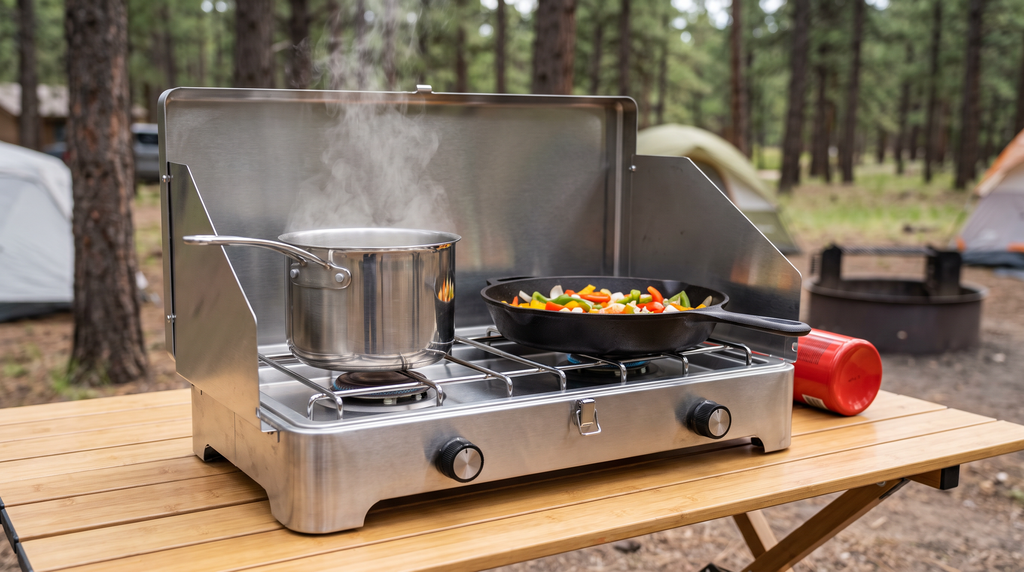
For most family camping trips and car-camping adventures, a two-burner camping stove is one of the most practical options.
Two burners allow you to cook two foods at the same time. For example, you can boil water or cook eggs on one burner while preparing bacon, vegetables, or another dish on the second.
A good example is the Coleman Cascade 222, which has two independently adjustable burners and up to 11,000 BTU per burner. It also includes wind protection and automatic ignition.
Two-burner stoves are generally heavier than backpacking models, but that extra size can be worthwhile when you’re driving to the campsite rather than carrying everything in a backpack.
Best for: families, couples, car camping, and longer camping trips.
2. Best Compact Option: Single-Burner Butane Stove
If you don’t need two burners, a single-burner stove can be a convenient alternative.
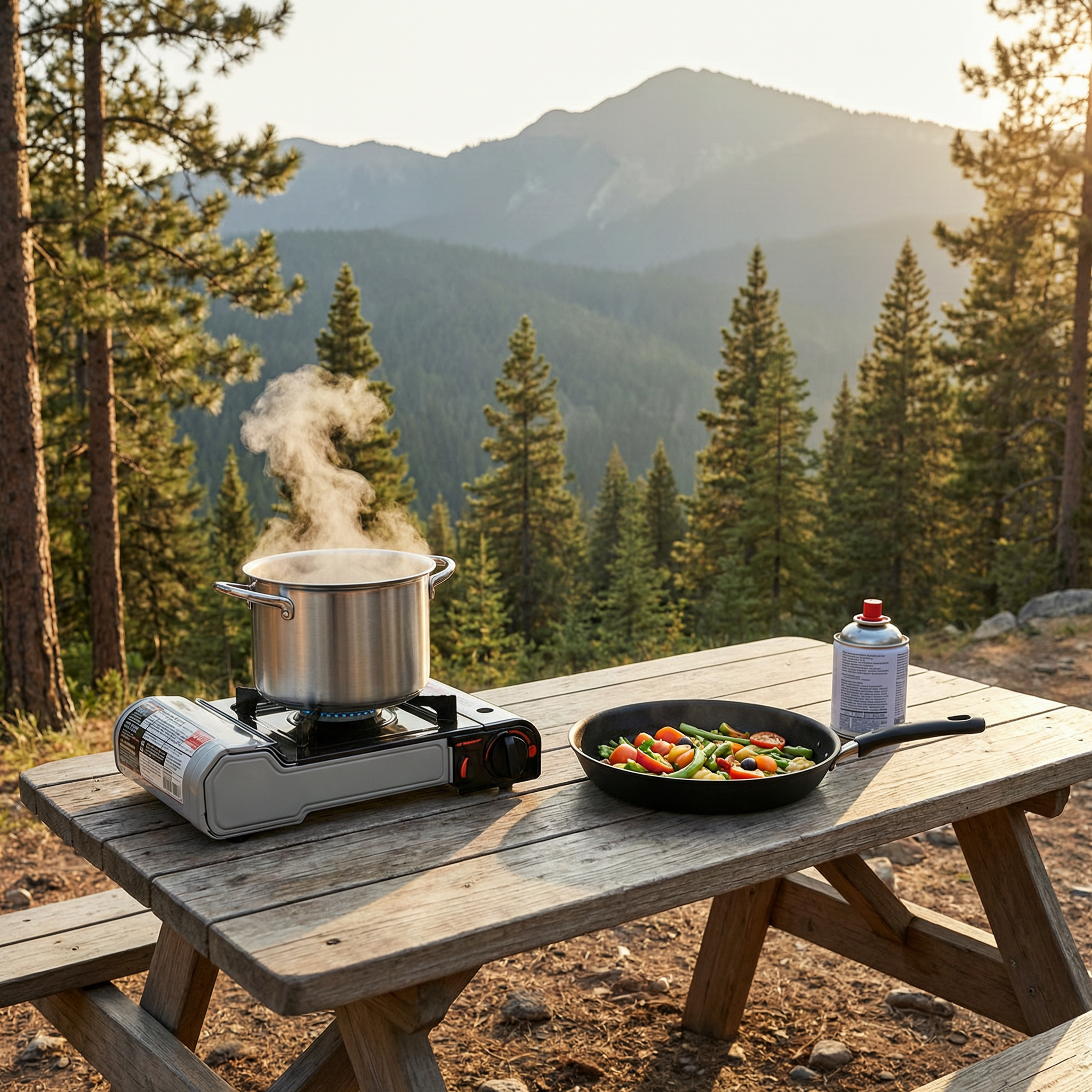
Single-burner models are useful when you’re cooking simple meals, boiling water, heating soup, or making coffee outdoors. They’re also easier to pack than larger two-burner camping stoves.
For example, the Snow Peak Home & Camp Butane Stove uses butane and has a compact design with automatic ignition and adjustable temperature control.
This type of stove is especially useful for campers who prioritize portability and simplicity.
Best for: solo campers, couples, picnics, tailgating, and short trips.

3. Best for Backpacking: Lightweight Canister Stove
Backpacking requires a different approach to cooking.
When you’re carrying your equipment for several miles, every ounce matters. A lightweight canister stove can be a better option than a large camping stove because it takes up very little space and is designed for simple cooking.
Canister stoves commonly screw directly onto fuel canisters and are generally easy to operate and maintain. REI notes that canister stoves are popular because they’re compact and lightweight.
They’re particularly useful for boiling water, preparing dehydrated meals, making oatmeal, or cooking simple one-pot dishes.
Best for: backpacking, hiking, minimalist camping, and solo trips.

4. Best for Fast Cooking and Boiling
If your priority is boiling water quickly, consider an integrated camping cooking system.
These systems combine the burner and cooking vessel into a more efficient setup. They’re particularly popular with backpackers and campers who mainly need hot water for coffee, tea, dehydrated meals, or quick breakfasts.
A compact system can also reduce the amount of cookware you need to carry.
However, integrated systems aren’t always the best choice if you want to cook large meals or use different-sized pots and pans.
Best for: fast boiling, hot drinks, freeze-dried meals, and lightweight camping.
5. Best for Larger Groups
When you’re cooking for several people, a larger two-burner stove is usually more practical than a compact backpacking model.
A wider cooking surface gives you more room for multiple pots and pans. Some larger models also provide stronger burners, which can be useful when cooking outdoors because wind can reduce the effectiveness of a flame.
REI explains that camping stoves often need more power than typical household burners because outdoor wind can interfere with the flame.
If you’re planning a group camping trip, you may also want to prepare food in batches. Our guide to essential cooking gear for a weekend camping trip can help you organize the rest of your outdoor kitchen.
How to Choose the Best Portable Stove for Camping
Choosing a camping stove isn’t just about picking the most powerful model. Think about your cooking style, transportation, fuel availability, and the number of people you’re feeding.
1. Consider the Fuel Type
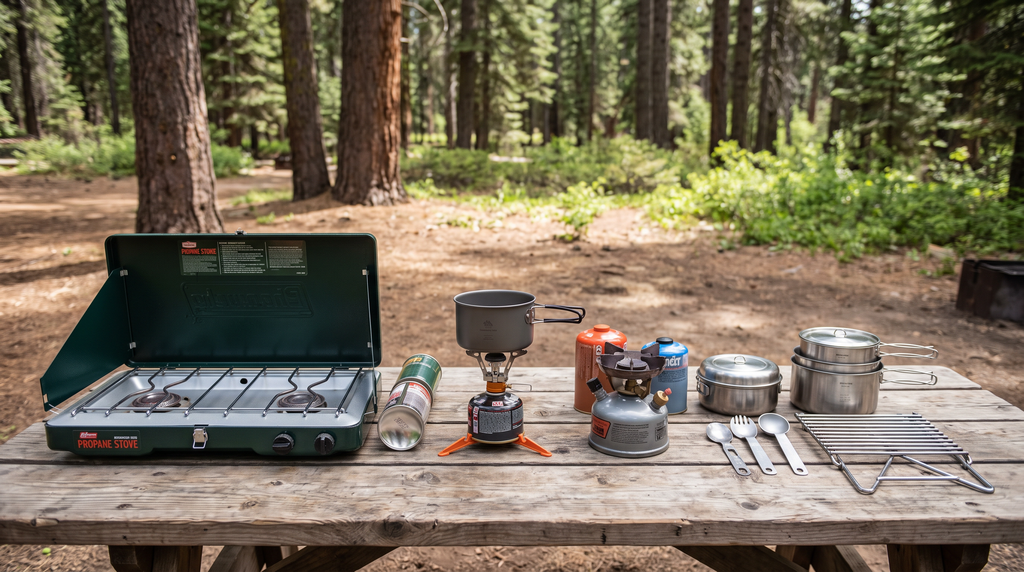
Portable camping stoves can use several types of fuel.
Propane:
Propane is popular for car camping because it’s widely available and easy to use. Larger stoves can also be connected to larger propane tanks when supported by the manufacturer.
Butane:
Butane stoves are often compact and convenient for simple outdoor cooking.
Canister fuel:
Canister stoves are popular with backpackers because they’re compact, lightweight, and easy to set up.
Liquid fuel:
Liquid-fuel stoves can be useful in cold weather and at higher elevations, although they generally require more setup and maintenance.
Before buying a stove, check which fuel is available where you’re camping.
2. Think About the Number of Burners
A one-burner stove is usually enough for simple meals.
A two-burner stove is better if you want to cook several foods at the same time.
For example, you could use one burner for pasta and the other for sauce. This can save considerable time when preparing dinner at camp.
3. Check the Weight
Weight is especially important for backpacking.
A large two-burner stove may be perfectly reasonable when you’re driving to your campsite, but it can become inconvenient if you’re carrying it in a backpack.
For car camping, prioritize stability and cooking space. For backpacking, prioritize low weight and compact size.
4. Look for Wind Protection
Wind can make outdoor cooking much harder.
A stove with built-in wind protection can help maintain a more consistent flame and make cooking more efficient.
This is one reason larger camping stoves often include wind shields around the burners. The Coleman Cascade 222, for example, uses built-in shields to protect the flames from wind.
5. Consider Heat Control
Maximum heat isn’t everything.
A powerful burner is useful when you need to boil water quickly, but good simmer control is equally important when you’re cooking foods that can burn easily.
Look for a stove with adjustable controls that allow you to move smoothly from high heat to a low simmer.
6. Automatic Ignition
Automatic ignition is a convenient feature because you don’t need matches or a separate lighter to start the burner.
It’s especially useful when you’re cooking outdoors in windy conditions.
However, it’s still smart to carry a backup lighter or matches as part of your camping equipment.
What Can You Cook on a Portable Camping Stove?
A portable stove is much more versatile than many people realize.
You can prepare:
- Eggs and breakfast potatoes
- Pancakes
- Pasta
- Rice
- Soup
- Stir-fried vegetables
- Chicken
- Fish
- Oatmeal
- Coffee and tea
- One-pot meals
For more ideas, you can combine your camping stove with our guide to one-pan meals that save time and money.
If you’re planning a healthy camping menu, dishes such as a grilled chicken quinoa bowl can also work well with the right camping cookware.
Portable Stove vs. Campfire Cooking
Both methods have advantages, but a camping stove is usually easier when you want predictable cooking temperatures.
A campfire can be fun and traditional, but controlling the heat isn’t always easy. A portable stove gives you a burner that you can turn up or down as needed.
A stove can also be a better option in locations where campfire restrictions are in place. Rules vary by park and location, so always check local regulations before your trip. The National Park Service, for example, notes that fire restrictions can change depending on conditions and that campers should follow local requirements.
Essential Gear to Use With Your Camping Stove
A stove is only one part of a good outdoor kitchen.
You’ll also want to consider bringing:
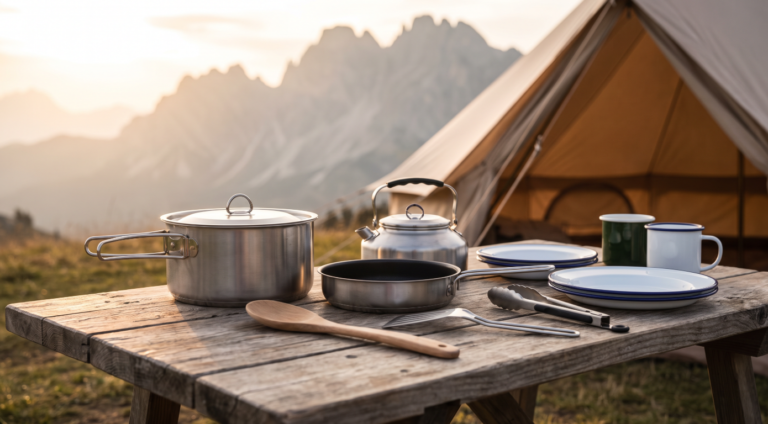
- Camping cookware
- A frying pan
- A cooking pot
- Spatula and cooking utensils
- Plates and bowls
- Reusable cups
- Cutting board
- Knife
- Fuel canister
- Lighter or matches
- Cleaning supplies
- Food storage containers
If you’re building a complete camp kitchen, check out our guide to best camping cookware for outdoor cooking and our recommendations for best portable cooking utensils for camping.
Camping Stove Safety Tips
Portable gas stoves are convenient, but they must be used carefully.
Always read the manufacturer’s instructions before using a new stove. The National Park Service recommends practicing with a new camp stove before your trip so you can become familiar with how it operates and identify any damaged parts.
Keep these safety tips in mind:
Use Your Stove Outdoors
Never use a fuel-burning camping stove inside a tent, enclosed vehicle, or other poorly ventilated space. Burning fuel can produce carbon monoxide, which can be extremely dangerous.
Keep Flammable Materials Away
Set up your stove on a stable, level surface away from dry grass, paper, clothing, and other flammable materials.
Check the Fuel Connection
Before lighting the stove, make sure the fuel connection is secure and follow the manufacturer’s instructions.
Never Refill Disposable Propane Cylinders
The National Park Service warns that single-use propane cylinders should never be refilled. Attempting to refill them can cause leaks, fires, or serious injuries.
Follow Local Fire Restrictions
Always check the rules for your campground or public land before using a stove. Fire restrictions can change with weather and wildfire conditions.
How to Make Outdoor Cooking Easier
The right stove can make camping meals much easier, but organization matters too.
Before leaving home, prepare as many ingredients as possible. Chop vegetables, measure spices, and organize ingredients in sealed containers.
Choose meals that don’t require complicated preparation.
One-pot recipes are particularly useful because they reduce the amount of cookware you need and make cleanup easier.
You can also create a simple camping meal plan that includes breakfast, lunch, dinner, and snacks.
If you’re bringing several people, plan meals that can be cooked in batches rather than preparing separate dishes for everyone.
Frequently Asked Questions
What is the best portable stove for camping?
For family and car camping, a two-burner propane stove is one of the most versatile choices. For backpacking, a lightweight canister stove is usually more practical because it takes up less space and adds less weight to your pack.
Are portable camping stoves safe?
Portable camping stoves can be used safely when operated according to the manufacturer’s instructions. Always use fuel-burning stoves outdoors in a well-ventilated area, keep flammable materials away, and follow local fire regulations.
Is propane or butane better for camping?
Neither fuel is universally better. Propane is popular for larger camping stoves and longer outdoor cooking sessions, while butane can be convenient for compact single-burner stoves. Your choice should depend on the stove design, weather, availability, and type of camping.
How many burners do I need for camping?
One burner is usually enough for solo campers or simple meals. Two burners are better for families and anyone who wants to cook multiple foods at the same time.
What should I look for in a portable camping stove?
Focus on fuel type, weight, number of burners, cooking surface, heat output, simmer control, wind protection, ignition, and overall portability.
Can I use a camping stove indoors?
Fuel-burning camping stoves should not be used inside tents, vehicles, or other enclosed spaces because of fire and carbon monoxide risks. Always follow the manufacturer’s safety instructions.
Final Thoughts
The best portable stove for camping depends on how you plan to use it.
If you’re going car camping with family or friends, a stable two-burner propane stove is a practical choice. If you’re traveling light or backpacking, a compact canister stove can save valuable space and weight. For simple meals and quick outdoor cooking, a single-burner butane stove can be all you need.
Before buying, think about your typical camping trips, the number of people you’ll cook for, the type of meals you enjoy, and the fuel available at your destination.
A good camping stove, combined with the right cookware and a little meal planning, can turn a basic campsite into a surprisingly capable outdoor kitchen.
For more ideas, explore our guides to essential kitchen tools to pack for a camping trip and essential cooking gear for a weekend camping trip.