
Essential Kitchen Tools to Pack for a Camping Trip
Camping is a great way to enjoy the outdoors, but preparing meals away from home can be challenging if you do not have the right kitchen tools. The good news is that you do not need to bring your entire kitchen with you. A few lightweight, practical, and multipurpose tools can make outdoor cooking much easier.
Whether you are planning a weekend camping trip, a family outdoor adventure, or a simple picnic, having the right cooking gear can help you prepare meals, clean up quickly, and keep your food organized.
In this guide, we will cover the essential kitchen tools to pack for a camping trip, along with practical tips for choosing compact and useful equipment.
1. Portable Camping Stove

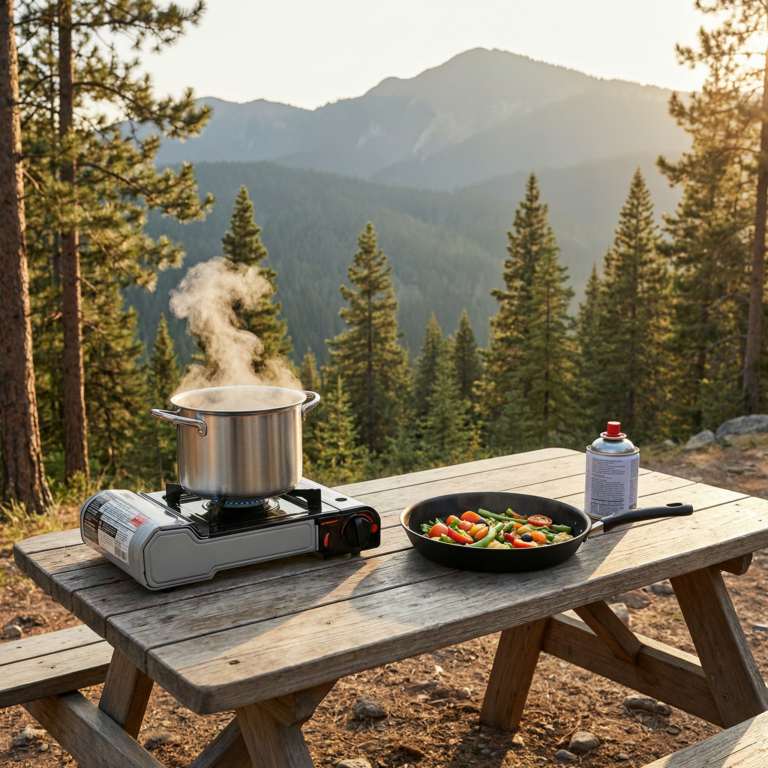
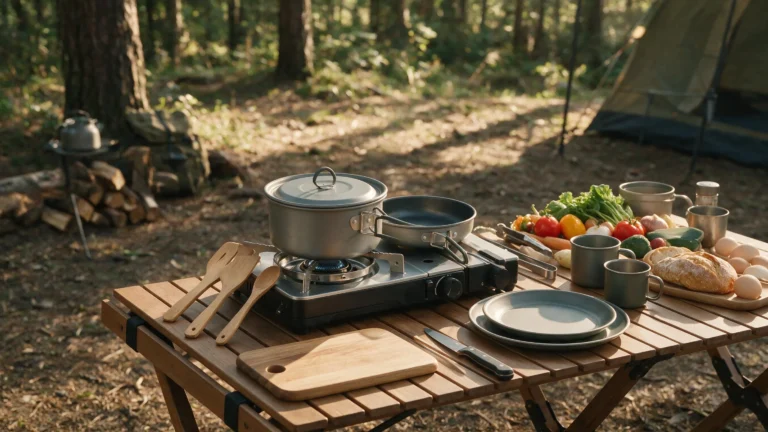
A portable camping stove is one of the most useful pieces of cooking equipment for outdoor trips. While some campers prefer cooking over a campfire, a compact stove can provide a more controlled and convenient cooking surface.
Before your trip, check the rules and fire restrictions for the area you plan to visit. The National Park Service also recommends practicing with a new camp stove before your trip so you know how it works and can identify any problems before you arrive.
When choosing a camping stove, consider:
- Weight and portability
- Fuel type and availability
- Cooking power
- Stability
- Ease of cleaning
- Wind protection
For most short camping trips, a compact single- or double-burner stove is enough to prepare simple meals.
2. Lightweight Camping Cookware
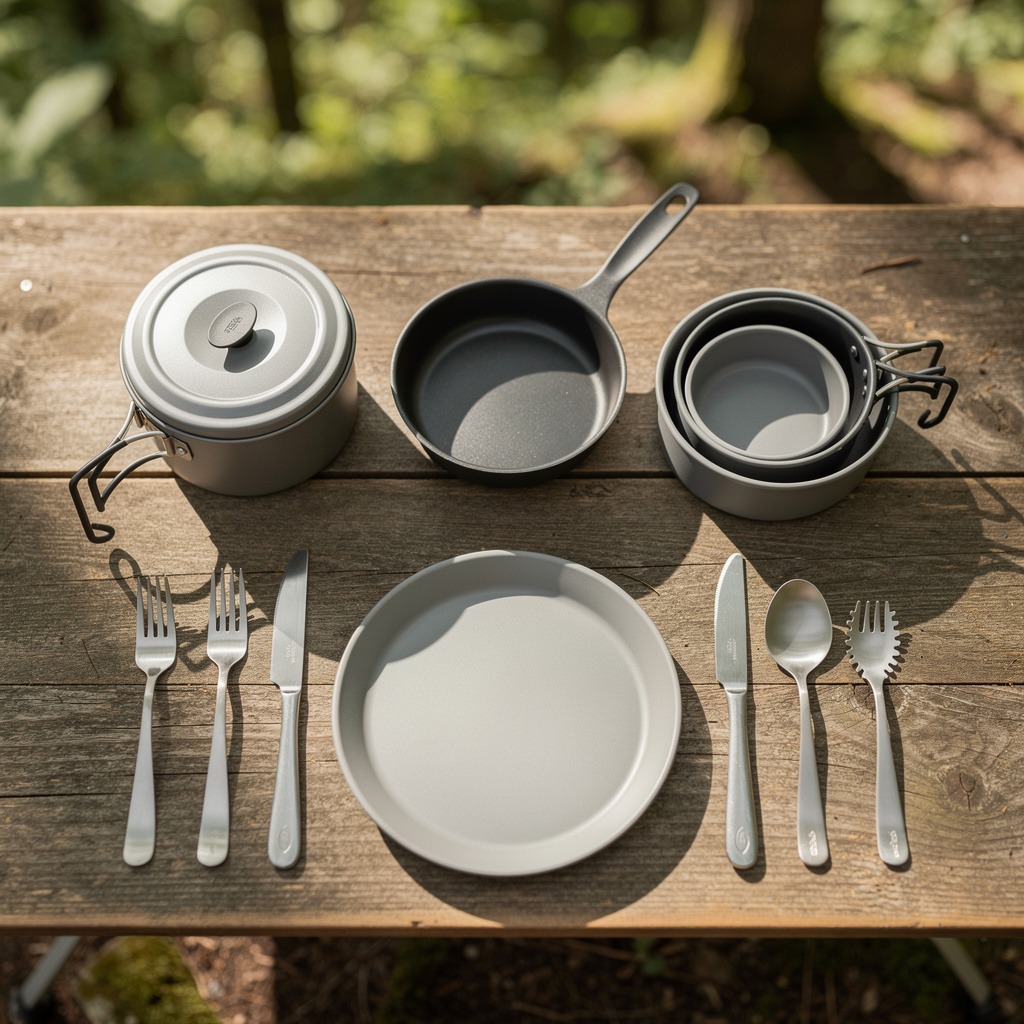
You do not need a large collection of pots and pans when camping. A lightweight pot, frying pan, or compact cookware set can handle most outdoor meals.
Look for cookware that is:
- Lightweight
- Durable
- Easy to clean
- Easy to stack
- Suitable for your camping stove
If you are comparing cookware materials before your trip, you may also want to read our guide to Best Nonstick Cookware Sets for Everyday Cooking.
For camping, however, portability is usually more important than having a large cookware collection.
3. A Good Camping Knife
A sharp, reliable kitchen knife can make food preparation much easier. You can use one knife for cutting vegetables, fruit, bread, cheese, and other ingredients.
A medium-sized chef’s knife or a compact camping knife is usually more practical than carrying several different knives.
When packing a knife, make sure it is stored safely in a protective sheath or knife cover. This protects the blade and helps prevent accidental cuts when reaching into your cooking bag.
4. Compact Cutting Board
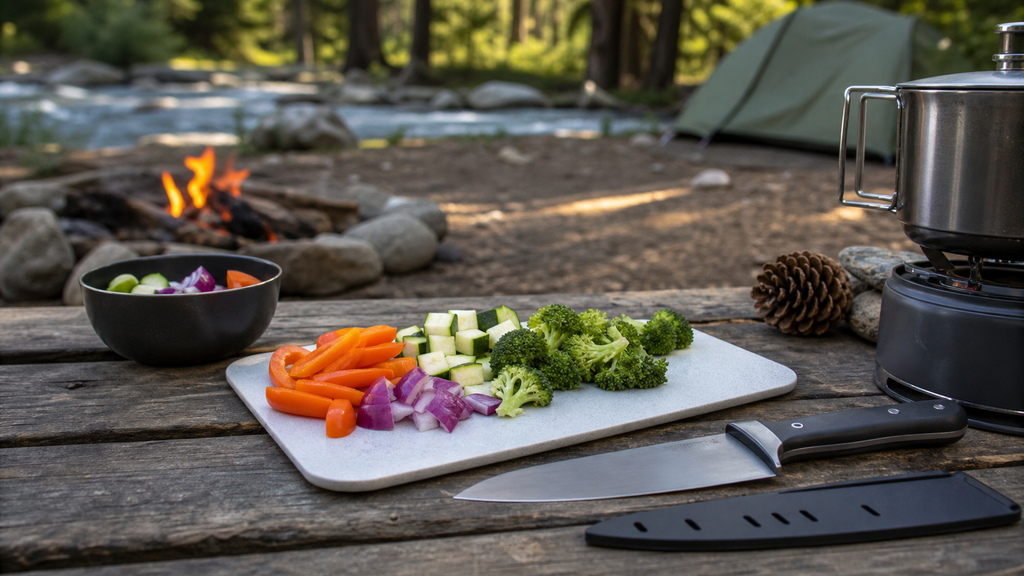
A cutting board is another simple tool that makes a big difference when preparing food outdoors.
Choose a small board that is:
- Lightweight
- Easy to wash
- Durable
- Large enough for basic food preparation
A folding or flexible cutting board can be especially useful because it takes up less space in your camping kitchen bag.
If you are preparing raw meat, keep the cutting board and utensils used for raw foods separate from items used for ready-to-eat foods. Proper separation helps reduce the risk of cross-contamination.
5. Multipurpose Cooking Utensils
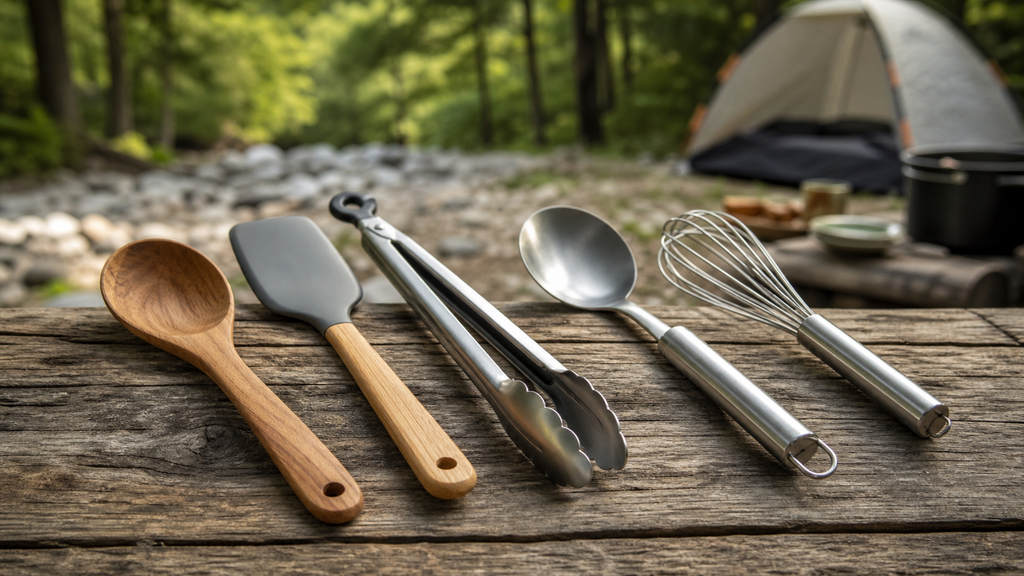
Instead of packing a large utensil collection, choose a few multipurpose tools.
Useful options include:
- Cooking spoon
- Spatula
- Tongs
- Serving spoon
- Small whisk
A compact utensil set can save space and make meal preparation easier.
Silicone or wooden utensils can work well for many camping meals, but always check that the material is appropriate for the cookware you are using.
6. Measuring Cups and Spoons
Measuring tools may not be essential for every camping meal, but they can be useful if you plan to prepare recipes that require specific ingredient amounts.
Collapsible measuring cups and nesting measuring spoons are particularly convenient because they take up very little room.
For simple camping meals, you can also prepare ingredients at home and measure them before leaving. This reduces the number of tools you need to bring.
7. Kitchen Tongs
A pair of kitchen tongs is one of the most versatile tools you can pack.
You can use tongs to:
- Turn vegetables
- Flip chicken
- Serve food
- Handle hot ingredients
- Move food around a pan
Choose a compact pair that locks closed if possible. A locking design makes the tongs easier to store inside a camping kitchen bag.
8. Can Opener
If you plan to bring canned beans, vegetables, tuna, soup, or other canned foods, do not forget a can opener.
A small manual can opener weighs very little and can save you from a frustrating situation at the campsite.
For longer trips, it is also useful to choose shelf-stable foods that require minimal preparation.
9. Reusable Plates, Cups, and Cutlery
Reusable camping plates, cups, bowls, and cutlery are practical alternatives to disposable tableware.
Choose products that are:
- Lightweight
- Durable
- Easy to wash
- Stackable
- Suitable for outdoor use
A compact camping dinnerware set can reduce the amount of space needed in your backpack or vehicle.
10. Food Storage Containers
Good food storage containers help keep your ingredients organized and protected during a camping trip.
Use containers for:
- Pre-cut vegetables
- Sandwich ingredients
- Leftovers
- Snacks
- Dry ingredients
- Spices
Leak-resistant containers are especially useful for sauces, marinades, and other liquids.
You can also prepare ingredients at home before leaving. Chopping vegetables, portioning ingredients, and organizing meals ahead of time can significantly reduce cooking time at the campsite.
11. A Quality Cooler
If you are bringing meat, dairy products, eggs, or other perishable foods, a cooler is an important part of your camping kitchen.
Keep perishable foods at 40°F (4.4°C) or below. The USDA identifies 40°F to 140°F (4.4°C to 60°C) as the temperature range where bacteria can grow rapidly.
Use plenty of ice or frozen packs and avoid opening the cooler unnecessarily.
For longer camping trips, consider planning meals around foods that do not require refrigeration. The National Park Service also recommends eating foods that need to stay cold earlier in a trip when possible.
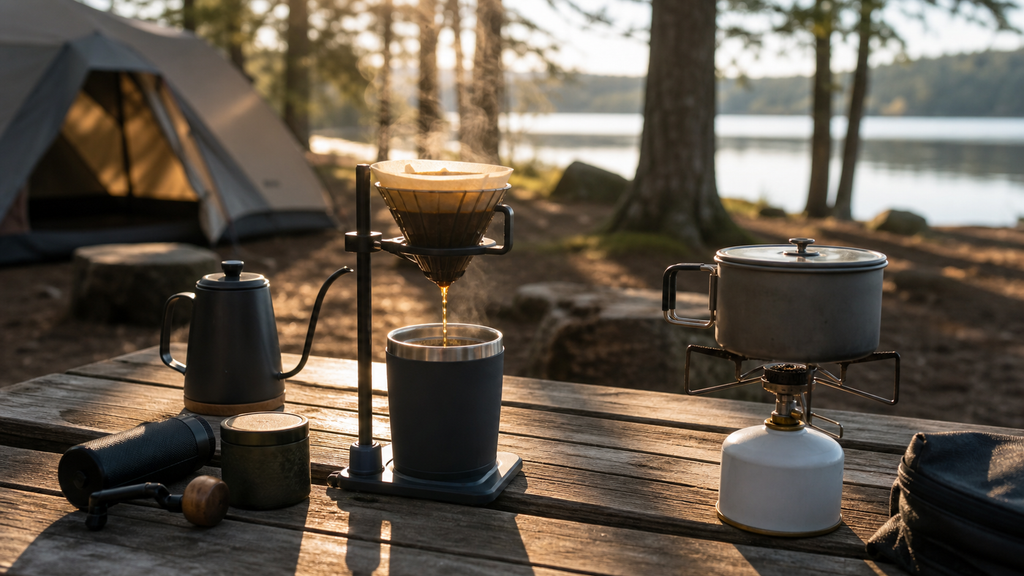
12. Portable Coffee Maker
For many campers, coffee is an essential part of the morning.
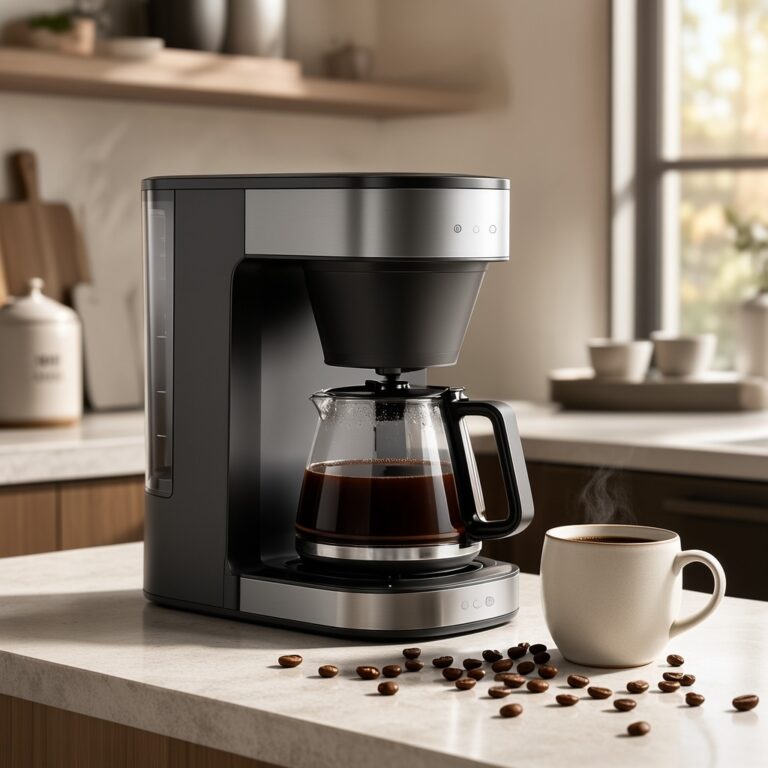
A compact pour-over coffee maker, French press, or other portable coffee system can be easier to pack than a full-size coffee machine.
If you enjoy making coffee at home, you can also check out our guide to Best Coffee Makers for Home Use to understand the differences between common coffee-making systems.
For camping, prioritize portability, durability, and easy cleanup.
13. Reusable Water Bottles
Bring enough reusable water bottles for everyone in your group, and make sure you know where your drinking water will come from.
A large reusable bottle or insulated bottle can also be useful for keeping drinking water available throughout the day.
If you are camping in an area where drinking water is not readily available, plan your water supply before leaving and follow local guidance about treating or filtering water.
14. Small Spice and Seasoning Containers
You do not need to bring your entire spice cabinet.
Instead, pack small containers with the seasonings you use most often, such as:
- Salt
- Black pepper
- Garlic powder
- Paprika
- Chili flakes
- Your favorite seasoning blend
Small leak-proof containers can keep your spices organized without taking up much room.
15. Kitchen Cleaning Supplies
Cleaning supplies are easy to forget but essential for outdoor cooking.
A simple camping cleaning kit can include:
- Biodegradable dish soap
- Small sponge
- Scrub pad
- Dish towel
- Small trash bags
- Paper towels
- Water container for washing
Follow the rules of the campsite or outdoor area when disposing of wastewater. Leave No Trace recommends washing dishes well away from lakes and streams and carrying wastewater to an appropriate washing area.
16. Food Thermometer
A small food thermometer can be extremely useful when cooking meat, poultry, or other foods outdoors.
Cooking by appearance alone is not always reliable. A thermometer allows you to check the internal temperature of food more accurately.
The USDA recommends using a food thermometer when cooking foods that need to reach a safe internal temperature.
A compact digital thermometer takes very little space, making it a practical addition to a camping kitchen kit.
17. Reusable Food Bags
Reusable or sealable food bags can help organize ingredients and reduce the number of bulky containers you need.
They are useful for:
- Snacks
- Sandwich ingredients
- Pre-measured dry ingredients
- Leftovers
- Small amounts of seasoning
The National Park Service notes that sealable bags can also be reused as waste bags when appropriate.
18. A Small Kitchen Towel
A simple kitchen towel has many uses at a campsite.
You can use it to:
- Dry dishes
- Clean surfaces
- Handle some cookware
- Keep your cooking area tidy
- Wrap certain utensils for storage
Choose a lightweight, quick-drying towel so it does not take up much space.
How to Pack Your Camping Kitchen Efficiently
Packing your camping kitchen does not have to be complicated. The key is to bring tools that can perform multiple jobs.
Start by planning your meals before your trip. Then make a list of the ingredients and tools required for each meal.
For example, a simple one-pot dinner may only require:
- One pot
- One cooking spoon
- One knife
- One cutting board
- One bowl or plate
- A few ingredients
One-pot meals are particularly useful for camping because they reduce the number of cooking utensils and simplify cleanup. Leave No Trace also recommends planning ahead and preparing food in ways that reduce unnecessary waste.
Try to avoid bringing duplicate tools. If one spatula can handle several meals, there is usually no reason to pack three different spatulas.
Camping Kitchen Checklist
Before leaving home, use this simple checklist:
Cooking Equipment
- Portable camping stove
- Fuel
- Lightweight pot
- Frying pan
- Cooking spoon
- Spatula
- Tongs
Food Preparation
- Kitchen knife
- Cutting board
- Can opener
- Measuring spoons
- Food thermometer
Eating
- Plates
- Bowls
- Cups
- Reusable cutlery
- Travel mugs
Food Storage
- Cooler
- Ice or frozen packs
- Food containers
- Reusable bags
- Small spice containers
Cleaning
- Dish soap
- Sponge
- Dish towel
- Trash bags
- Water container
Camping Food Safety Tips
Outdoor cooking requires a little extra attention to food safety.
Keep cold foods cold and avoid leaving perishable foods at unsafe temperatures for extended periods. According to the USDA, perishable foods should not remain in the 40°F–140°F (4.4°C–60°C) danger zone for more than two hours, or more than one hour when the outdoor temperature is above 90°F (32.2°C).
You should also:
- Wash your hands before preparing food.
- Keep raw meat separate from ready-to-eat foods.
- Clean cutting boards and utensils after preparing raw ingredients.
- Use a food thermometer when appropriate.
- Keep your cooler cold.
- Store food securely when you are not cooking.
- Follow local campsite food-storage rules.
For more detailed food-safety guidance, see the USDA food safety guidance.
Leave No Trace While Cooking
A good camping kitchen should make cooking easier without leaving unnecessary impact on the environment.
The Leave No Trace principles recommend packing out trash, leftover food, and other waste rather than leaving it at your campsite.
When cooking outdoors:
- Pack reusable tools whenever possible.
- Avoid leaving food scraps behind.
- Keep your cooking area clean.
- Dispose of wastewater properly.
- Follow local fire restrictions.
- Use a camping stove when appropriate.
- Never leave a campfire unattended.
- Make sure fires are completely extinguished before leaving.
The National Park Service recommends checking local fire restrictions and keeping portable stoves on clear, stable surfaces away from dry vegetation.
Final Thoughts
You do not need a huge collection of kitchen equipment to cook good meals while camping. A portable stove, lightweight cookware, reliable knife, cutting board, cooking utensils, food containers, cooler, and cleaning supplies can cover most basic outdoor cooking needs.
The best camping kitchen is one that is simple, lightweight, organized, and easy to clean. Plan your meals before the trip, choose multipurpose tools, and pack only what you are likely to use.
With the right setup, preparing breakfast, lunch, and dinner outdoors can be just as enjoyable as cooking at home.
Frequently Asked Questions
What are the most important kitchen tools for camping?
The most important tools include a portable stove, lightweight cookware, a kitchen knife, cutting board, cooking spoon, spatula, tongs, food containers, cooler, and reusable plates and cutlery.
What cookware should I bring camping?
Choose lightweight and durable cookware that matches your cooking method. For most trips, one pot and one frying pan are enough for preparing a variety of simple meals.
Do I need a cooler for camping?
If you are bringing perishable foods such as meat, dairy products, or eggs, a cooler is strongly recommended. Keep these foods at or below 40°F (4.4°C) to reduce the risk of bacterial growth.
What food should I bring on a camping trip?
Choose foods that are easy to transport and prepare. Shelf-stable foods, canned foods, dry ingredients, pasta, rice, oats, and pre-prepared ingredients can all work well. If you bring perishable foods, keep them properly chilled.
How can I reduce the amount of kitchen gear I bring?
Choose multipurpose tools and plan your meals in advance. One pot, one pan, one knife, and a few versatile utensils can prepare many simple camping meals.
How do I clean dishes while camping?
Use a small amount of water and appropriate soap, and follow the rules of the area where you are camping. Do not wash dishes directly in lakes or streams. Leave No Trace recommends carrying dishwashing water away from water sources and disposing of it properly.