Best Nonstick Cookware Sets for Everyday Cooking
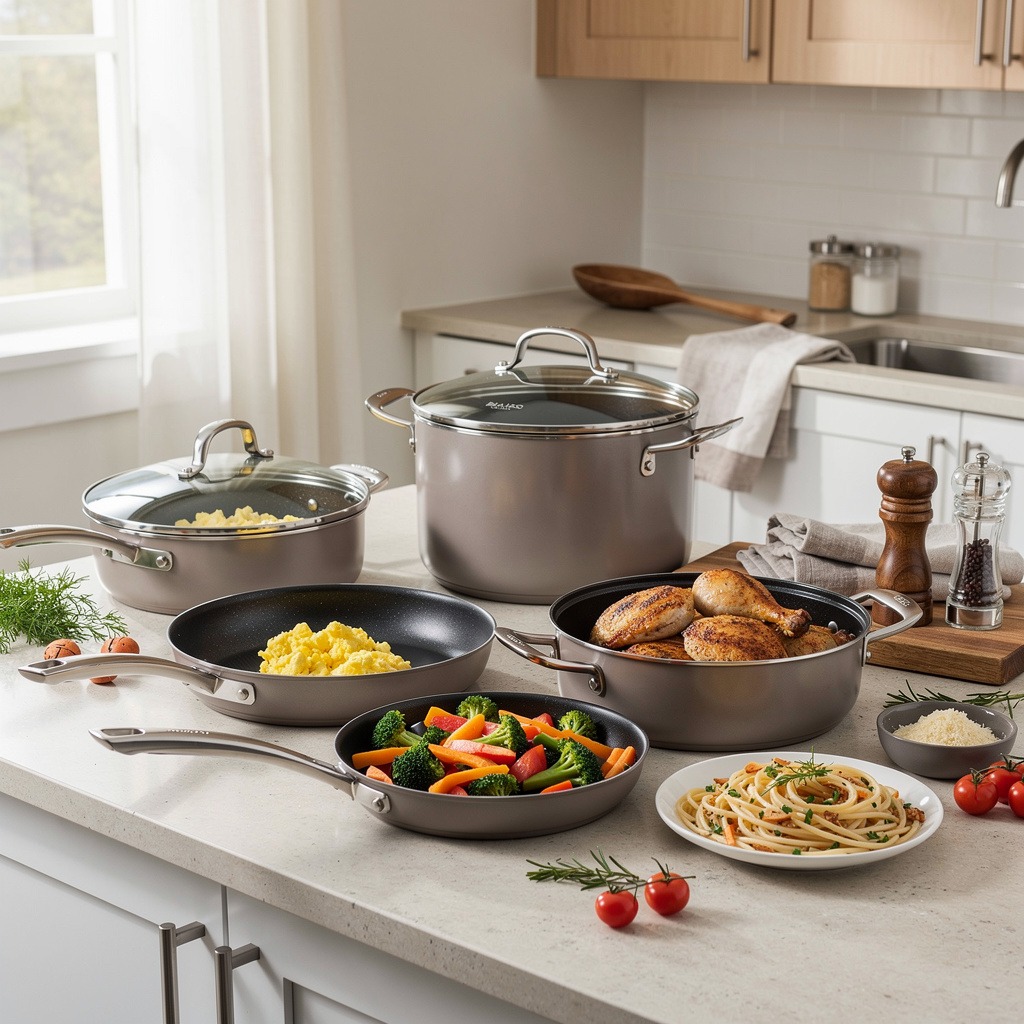
Choosing the right cookware set can make everyday cooking easier, faster, and more enjoyable. A good nonstick cookware set should make it simple to cook eggs, pancakes, vegetables, chicken, sauces, and other everyday meals without food sticking to the pan.
But with so many cookware sets available, choosing the right one can be confusing. Some sets contain a large number of pieces that you may rarely use, while others focus on a smaller collection of essential pots and pans.
The best nonstick cookware set for everyday cooking is not necessarily the most expensive one. Instead, look for a set with reliable nonstick performance, comfortable handles, useful pan sizes, easy cleanup, and compatibility with your stovetop.
In this guide, we’ll explain what to look for when buying nonstick cookware and how to choose a set that fits your kitchen and cooking style.
What Is Nonstick Cookware?
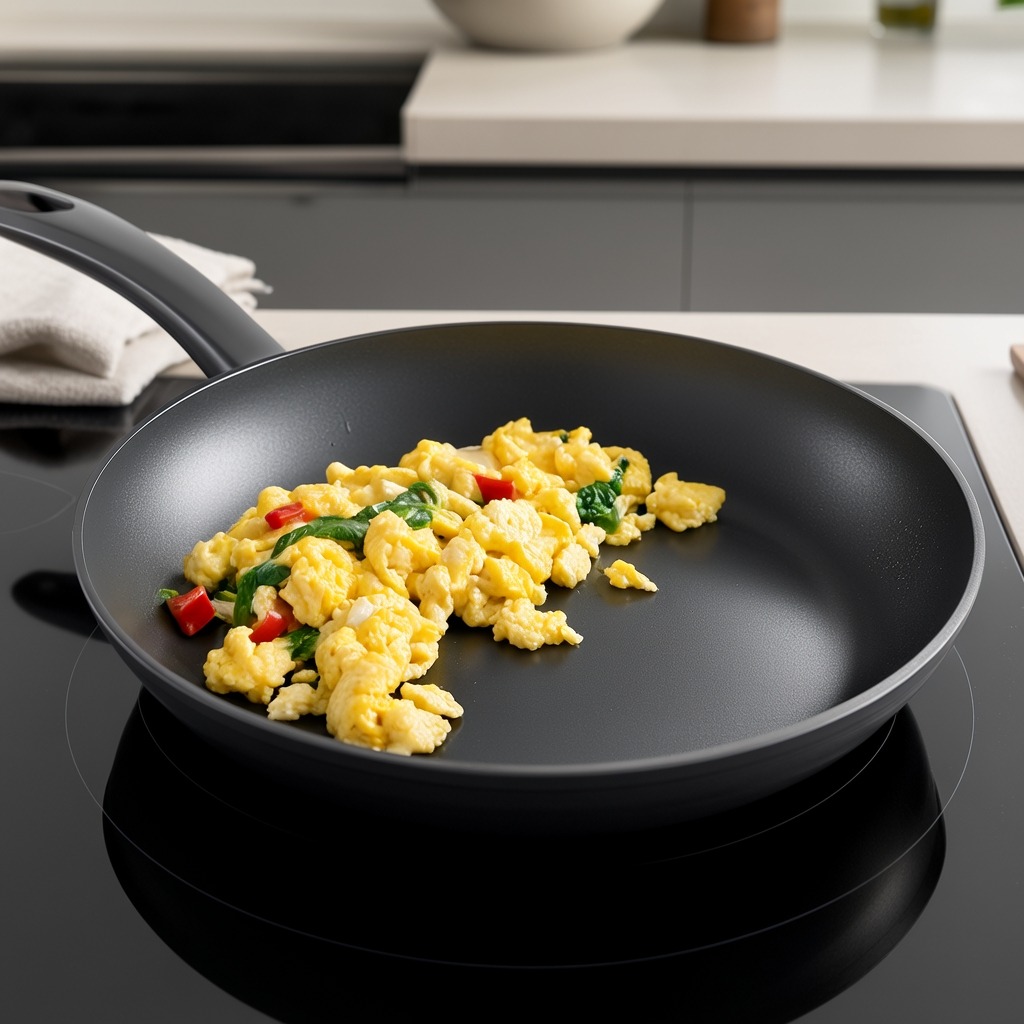
Nonstick cookware is designed with a surface that helps food release easily from the pan during cooking.
This makes nonstick cookware particularly useful for delicate foods such as eggs, pancakes, fish, and other foods that can easily stick to traditional cookware. Consumer Reports notes that nonstick pans can also make cleanup easier because food releases from the surface more readily.
Most nonstick cookware uses an aluminum or similar metal body with a nonstick coating applied to the cooking surface. Other products use ceramic-based nonstick coatings.
The right option depends on your cooking habits, budget, stovetop, and preferences.
Why Choose a Nonstick Cookware Set?
A cookware set can be a convenient way to build or upgrade your kitchen collection.
Instead of buying individual pans separately, a set may include several commonly used pieces such as:
- Frying pans
- Saucepan
- Sauté pan
- Stockpot
- Lids
- Cooking utensils
A set can also provide matching cookware that stacks neatly in a cabinet.
However, more pieces do not always mean better value. Some manufacturers count lids, utensils, or other accessories toward the total number of pieces. Consumer Reports recommends checking exactly what is included rather than choosing a set simply because it has a high piece count.
What to Look for in the Best Nonstick Cookware Set
Before buying a cookware set, consider these important factors:
- Nonstick coating
- Pan sizes
- Construction and materials
- Handle design
- Stovetop compatibility
- Oven safety
- Cleaning requirements
- Durability
- Storage
- Warranty
- Overall value
Let’s look at each one.
1. Choose the Right Cookware Pieces
The first thing to check is what you actually get in the set.
For everyday cooking, a practical cookware collection might include:

8-Inch Frying Pan
A smaller skillet is useful for:
- Eggs
- Pancakes
- Small portions
- Grilled sandwiches
- Quick reheating
10-Inch Frying Pan
A 10-inch skillet is one of the most versatile pieces for everyday cooking.
You can use it for:
- Chicken breasts
- Vegetables
- Eggs
- Fish
- Stir-fries
- Pancakes
- Ground meat
2- to 3-Quart Saucepan
A saucepan is useful for:
- Sauces
- Oatmeal
- Rice
- Small portions of pasta
- Boiling vegetables
- Heating soups
5- to 6-Quart Pot
A larger pot can be useful for:
- Pasta
- Soups
- Stews
- Family-sized meals
- Boiling larger quantities of food
Sauté Pan
A sauté pan can be especially useful if you cook meals that combine meat, vegetables, and sauce.
Before buying a large set, think about which pieces you use most often. A smaller set with useful cookware can be a better choice than a 15- or 20-piece set containing pans that spend most of their time in storage.
2. Understand Nonstick Coatings
Not all nonstick cookware uses the same type of coating.
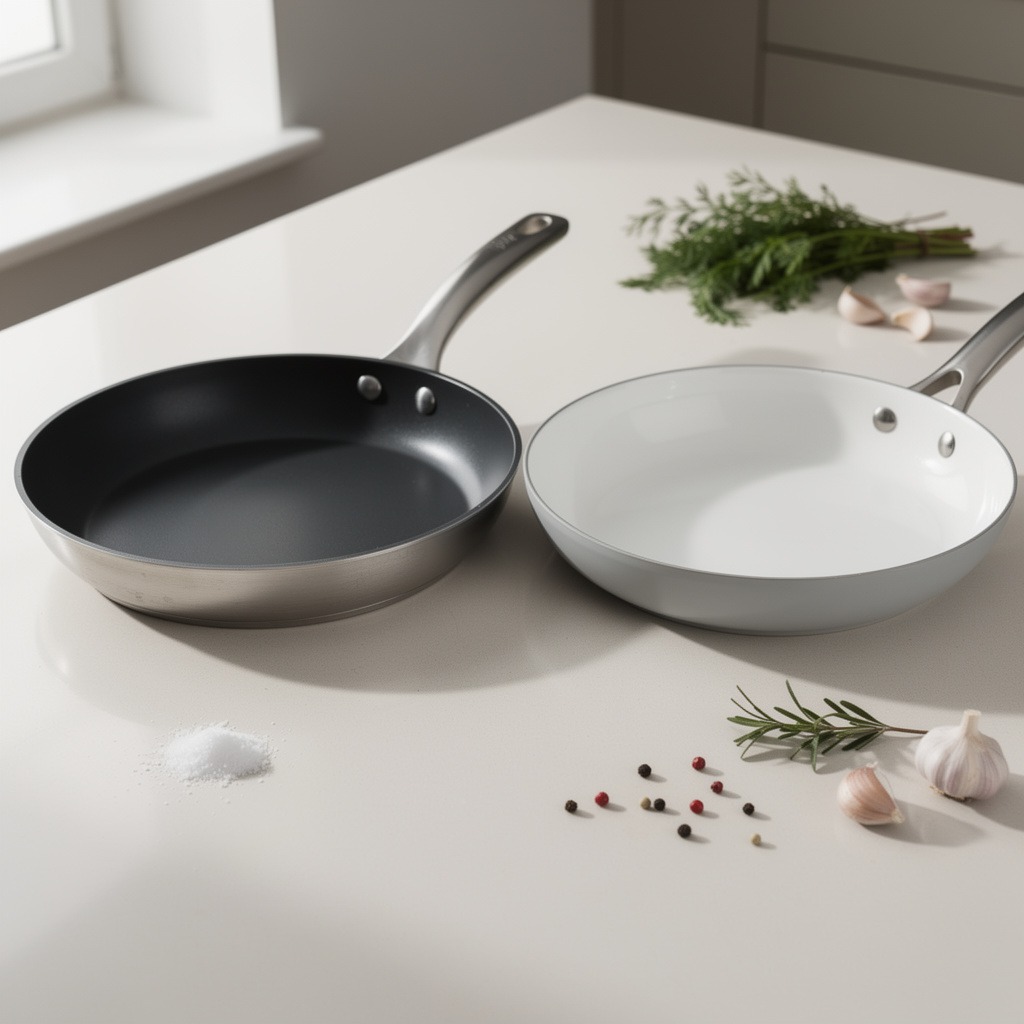
The two common categories you will encounter are traditional nonstick coatings and ceramic nonstick coatings.
Traditional Nonstick Coatings
Traditional nonstick cookware commonly uses PTFE-based coatings.
These coatings are designed to provide easy food release and are widely used in nonstick cookware.
The U.S. Food and Drug Administration explains that certain PFAS-related substances are approved for specific food-contact applications, including some nonstick cookware coatings, following safety evaluations.
If you choose traditional nonstick cookware, follow the manufacturer’s instructions regarding cooking temperatures, utensils, cleaning, and care.
Ceramic Nonstick Coatings
Ceramic-coated cookware is another popular option.
Consumer Reports’ recent testing found several ceramic-coated nonstick pans performed very well in food release and cooking evenness tests.
Ceramic nonstick cookware can be appealing to shoppers who specifically want cookware marketed without PTFE.
However, performance and durability can vary between products, so the coating type should not be the only factor you consider.
3. Consider the Pan Construction
The construction of the cookware affects how it heats and how it performs during everyday cooking.
Many nonstick pans use aluminum because it heats relatively quickly and efficiently.
Some cookware also uses multiple layers or additional materials to improve heat distribution, durability, or compatibility with different stovetops.
A heavier pan is not automatically better, but cookware should feel stable and balanced when you hold it.
Consumer Reports recommends paying attention to the balance, weight, and sturdiness of cookware handles before buying.
4. Check Stovetop Compatibility
Before buying a cookware set, make sure it works with your stove.
Common stovetop types include:
- Gas
- Electric
- Glass or ceramic
- Induction
Induction cooking requires cookware with magnetic properties.
If you have an induction cooktop, always check the manufacturer’s specifications before buying. Consumer Reports specifically notes that induction cooktops require cookware with magnetic properties.
If you are unsure about your stovetop type, check your appliance manual or manufacturer information.
5. Look at Oven Safety
Oven compatibility can make a cookware set much more versatile.
Some nonstick cookware can safely go into the oven, while others have temperature limitations.
Always check the manufacturer’s maximum oven temperature rather than assuming all nonstick pans have the same rating.
Also remember that handles and lids may have different temperature limits from the pan itself.
Consumer Reports recommends checking the exact oven-safe temperature because cookware can have significantly different limits.
6. Choose Comfortable Handles
Handles are easy to overlook when shopping online, but they can make a major difference in everyday use.
Look for handles that are:
- Comfortable to grip
- Securely attached
- Well balanced
- Large enough to hold safely
- Designed to stay reasonably cool during stovetop cooking
A pan should feel balanced when you lift it, especially when it is filled with food.
If you have smaller hands, pay particular attention to handle shape and thickness.
7. Easy Cleaning Matters
One of the biggest advantages of nonstick cookware is easy cleanup.
Food is less likely to stick to the cooking surface, which can reduce the effort needed after cooking.
However, you should still follow the manufacturer’s cleaning instructions.
Even when a cookware set is labeled dishwasher-safe, hand washing may help preserve the nonstick surface for longer.
Avoid abrasive cleaners and harsh scrubbing unless the manufacturer specifically recommends them.
Consumer Reports also notes that dishwasher use and harsh detergents can shorten the lifespan of some nonstick cookware.
8. Avoid Metal Utensils Unless the Manufacturer Allows Them
Metal utensils can damage some nonstick surfaces.
For everyday use, silicone, wood, or other cookware-safe utensils are often a better choice.
Always check the manufacturer’s instructions because different coatings have different care requirements.
If protecting the coating is a priority, using appropriate utensils can help keep the cooking surface in better condition.
9. Choose the Right Set Size
You do not necessarily need a huge cookware set.
For many households, a practical everyday collection could include:
- 8-inch frying pan
- 10-inch frying pan
- 2- or 3-quart saucepan with lid
- 5- or 6-quart pot with lid
- Sauté pan
This gives you enough flexibility for most everyday meals without filling your cabinets with unnecessary cookware.
If you already own a stockpot or Dutch oven, you may not need another one in your new set.
10. Nonstick vs. Stainless Steel
Nonstick cookware and stainless steel cookware serve different purposes.
Nonstick
Nonstick cookware is excellent for:
- Eggs
- Pancakes
- Delicate fish
- Low-oil cooking
- Quick everyday meals
- Easy cleanup
Stainless Steel
Stainless steel is particularly useful for:
- Browning meat
- Searing
- Sauces
- High-heat cooking
- Long-term durability
Consumer Reports recommends choosing cookware based on the foods you cook most often rather than relying on one material for everything.
For many kitchens, having both nonstick and stainless steel cookware can be more practical than choosing only one.
11. How to Make Nonstick Cookware Last Longer
Even a high-quality cookware set needs proper care.
Follow these simple habits:
Use Moderate Heat
Avoid unnecessarily high heat unless the manufacturer specifically allows it.
Use Appropriate Utensils
Choose utensils that are compatible with the coating.
Avoid Abrasive Cleaning
Do not aggressively scrub the cooking surface.
Do Not Stack Carelessly
If cookware is designed to nest, use protective separators when recommended.
Store Pans Carefully
Avoid placing sharp or heavy objects directly on the nonstick surface.
Replace Damaged Cookware
If the coating becomes badly scratched, peeling, or visibly damaged, consider replacing the cookware rather than continuing to use it.
12. Are Expensive Nonstick Cookware Sets Better?
Not necessarily.
A higher price can reflect better materials, construction, design, warranty, or brand positioning, but price alone does not guarantee better cooking performance.
Consumer Reports notes that budget-friendly cookware can sometimes perform just as well as more expensive options in its testing.
Instead of choosing based only on price, compare:
- Cooking performance
- Coating quality
- Construction
- Included pieces
- Handle design
- Oven compatibility
- Stovetop compatibility
- Cleaning requirements
- Warranty
13. Common Mistakes When Buying Nonstick Cookware
Buying a Set With Too Many Pieces
A large piece count can look attractive, but you may end up paying for cookware you rarely use.
Ignoring Stovetop Compatibility
Always make sure the cookware works with your stove, especially if you use induction.
Focusing Only on the Coating
The coating matters, but so do the pan’s construction, handle, size, and overall design.
Ignoring Oven Temperature Limits
Always check the manufacturer’s exact oven-safe temperature.
Choosing Based Only on Price
A cheap set may be excellent value, while an expensive set may include features you do not need.
Using the Wrong Utensils
Metal utensils can damage some nonstick surfaces.
Neglecting Care Instructions
Even high-quality cookware can wear out faster if it is cleaned or used incorrectly.
Nonstick Cookware Buying Checklist
Before purchasing a set, ask yourself:
☐ Does the set contain the pans I actually need?
☐ Is the cookware compatible with my stovetop?
☐ Is it induction-compatible if I need induction cookware?
☐ What type of nonstick coating does it use?
☐ Is the cookware oven-safe?
☐ What is the maximum oven temperature?
☐ Are the handles comfortable and secure?
☐ Is the cookware easy to clean?
☐ Can the pieces be stacked or stored easily?
☐ Does the manufacturer provide a reasonable warranty?
☐ Am I paying for useful pieces rather than unnecessary accessories?
Best Nonstick Cookware Set for Everyday Cooking: Final Thoughts
The best nonstick cookware set for everyday cooking should make your kitchen easier to use, not simply give you the highest number of pieces.
For most home cooks, a practical collection of frying pans, a saucepan, and a larger pot can cover a wide range of everyday meals.
Pay close attention to the nonstick coating, pan construction, handle design, stovetop compatibility, oven safety, cleaning requirements, and the actual pieces included in the set.
Most importantly, choose cookware based on how you cook.
If you regularly prepare eggs, pancakes, vegetables, fish, chicken, and quick weeknight meals, a quality nonstick set can be one of the most useful additions to your kitchen.
And if you are building a broader collection of kitchen equipment, you can also explore our guide to the best air fryer for beginners in 2026 and our best blender for smoothies.
With the right combination of useful pieces, easy maintenance, and reliable cooking performance, your cookware set can become a dependable part of your everyday kitchen routine.