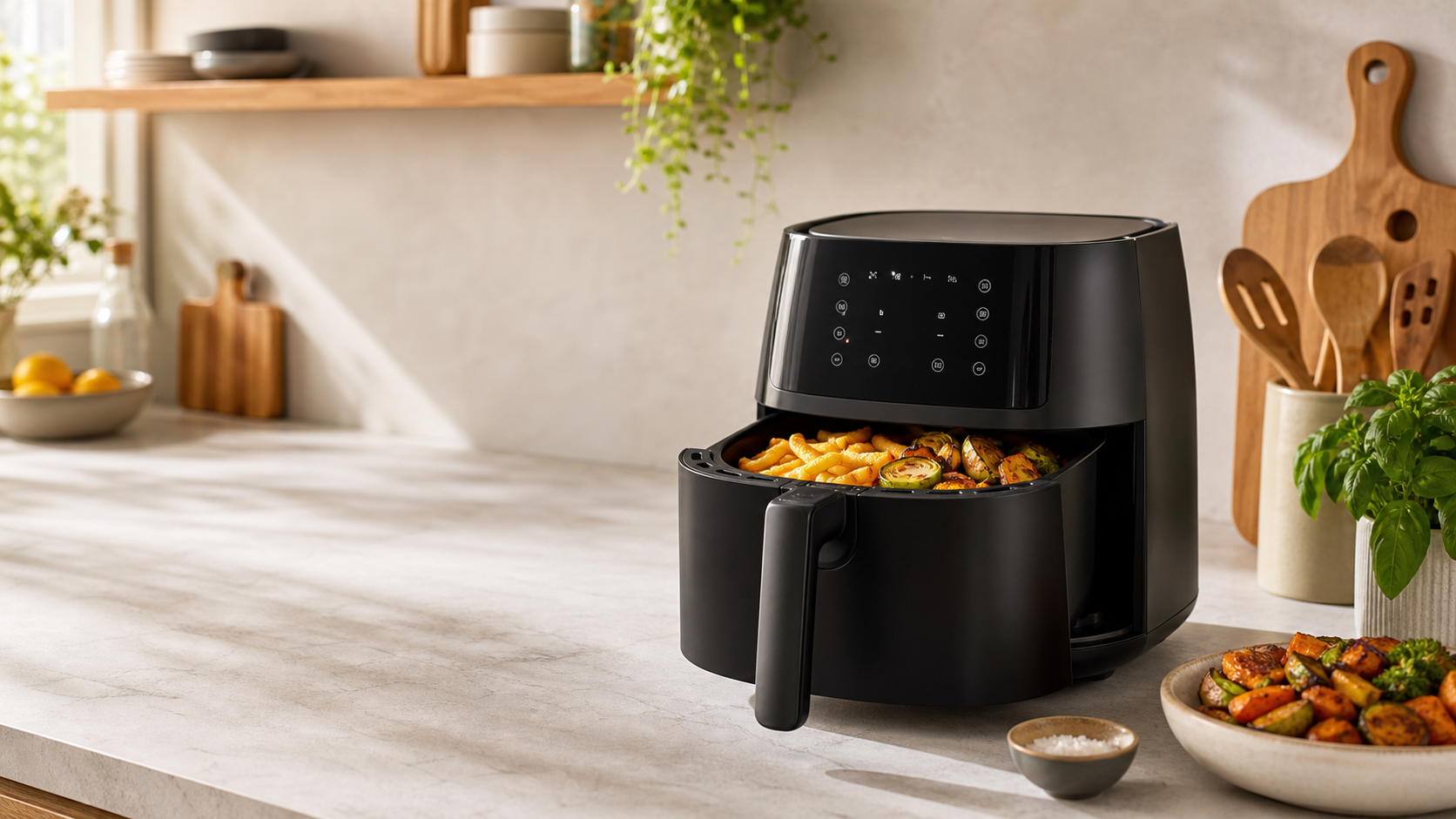
How to Choose an Air Fryer: Complete Buying Guide
Choosing an air fryer can be surprisingly difficult. With so many sizes, styles, features, and price points available, it is easy to buy a model that looks impressive but does not actually fit your cooking habits.
The best air fryer is not necessarily the biggest or most expensive one. The right choice depends on how many people you cook for, how much counter space you have, what foods you prepare most often, and which features you will actually use.
In this complete air fryer buying guide, we will explain what to look for, how to choose the right size, which features matter, and what mistakes to avoid before buying.
If you are looking for specific recommendations, check out our guide to the best air fryer for beginners in 2026.
What Is an Air Fryer?
An air fryer is a countertop cooking appliance that uses rapidly circulating hot air to cook food and create a crispy exterior with little or no added oil.
Although the name suggests traditional frying, an air fryer works more like a compact convection oven. Hot air circulates around the food, helping it brown and crisp while cooking relatively quickly.
Air fryers can be used for much more than fries. Depending on the model, you can use one to cook chicken, vegetables, fish, frozen foods, snacks, and even some baked dishes.
The USDA notes that air fryers can also be useful for baking, roasting, and reheating foods.

How to Choose the Right Air Fryer
Before comparing brands and features, focus on these six factors:
- Capacity
- Air fryer style
- Cooking power
- Temperature and cooking controls
- Ease of cleaning
- Counter space and storage
A model that performs well in all six areas is more likely to be useful for everyday cooking.
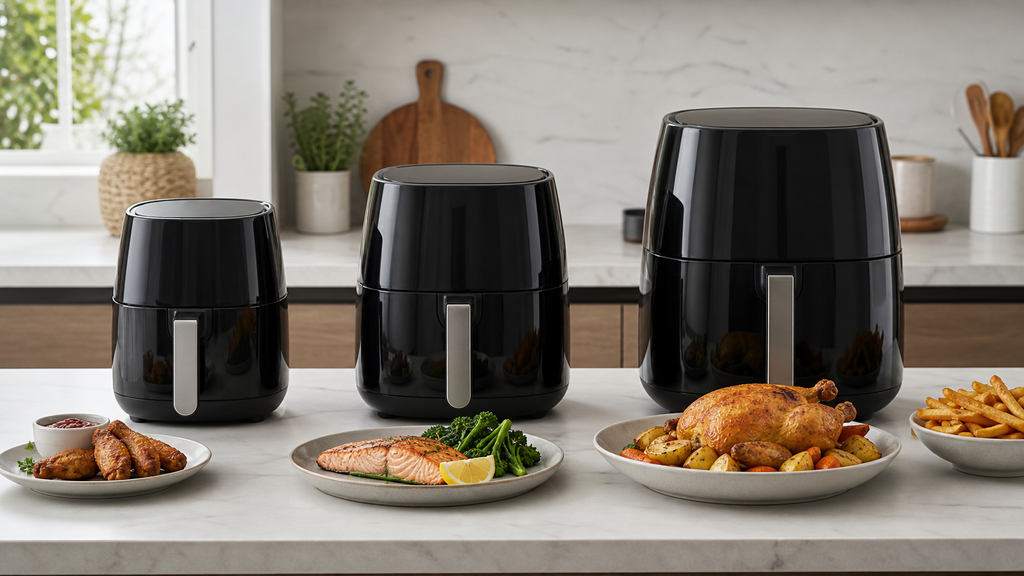
1. Choose the Right Air Fryer Size
Capacity is one of the most important things to consider.
Air fryer capacity is usually listed in quarts, but the advertised capacity does not always tell you how much food you can comfortably cook at once. The available cooking surface and basket design can be just as important.
Consumer Reports recommends considering both capacity and usable cooking space when choosing an air fryer.
Small Air Fryers: 2 to 3 Quarts
A small air fryer can be a good choice for:
- One person
- Small portions
- Snacks
- Reheating leftovers
- Small kitchens
The main advantage is that it takes up less counter space and is usually easier to store.
The downside is that you may need to cook several batches if you are preparing a full meal.
Medium Air Fryers: 4 to 5 Quarts
A 4- to 5-quart air fryer is a practical choice for couples and smaller households.
It offers more cooking space without becoming excessively large on the countertop.
This size can work well for chicken pieces, vegetables, fries, frozen foods, and everyday meals.
Large Air Fryers: 6 Quarts or More
Larger models are useful for families or people who regularly cook larger portions.
However, bigger does not automatically mean better.
A large appliance takes more counter space, and if the basket is too deep or poorly designed, you may still need to cook food in batches.
For crispy results, avoid overcrowding the basket. The USDA specifically recommends cooking in batches when necessary because overcrowding can interfere with air circulation and lead to uneven cooking.
2. Basket Air Fryer vs. Oven-Style Air Fryer
One of the biggest decisions is choosing between a traditional basket-style air fryer and an oven-style model.
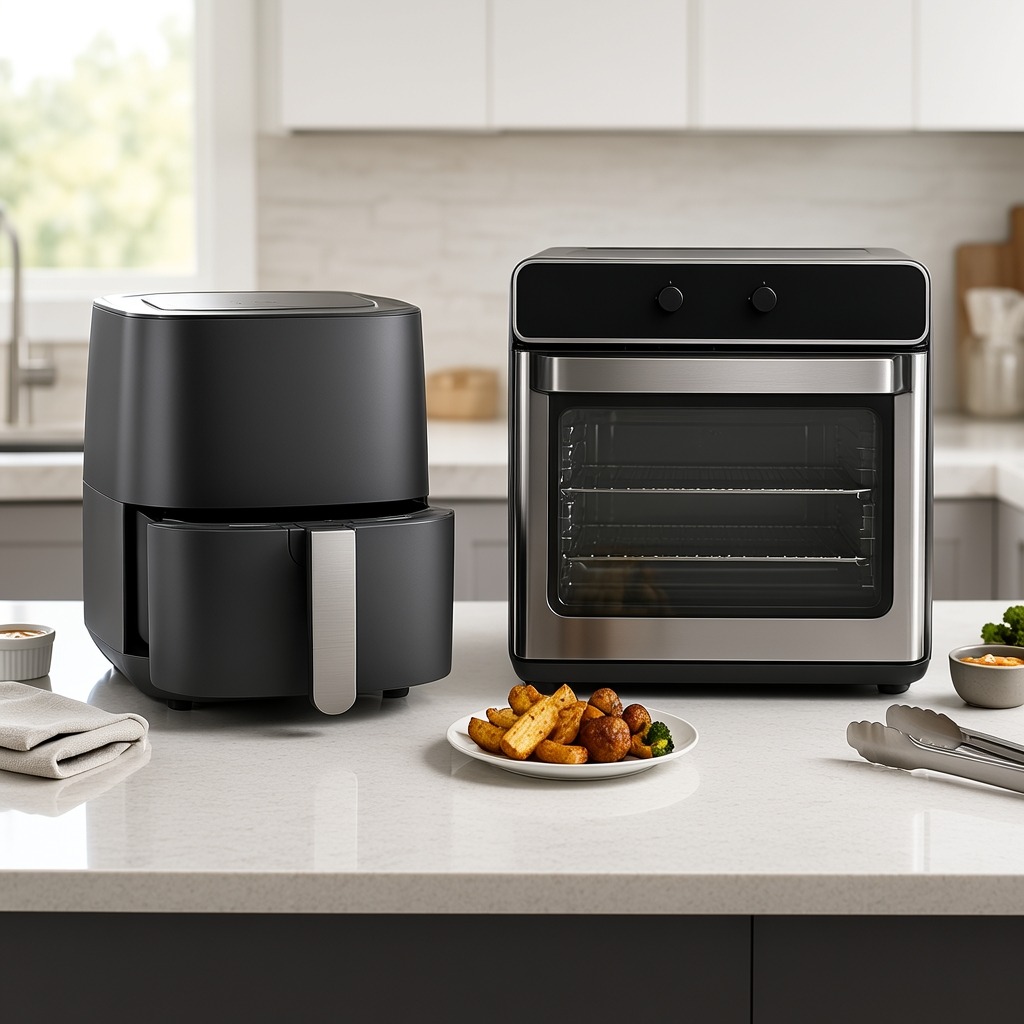
Basket-Style Air Fryers
Basket models are usually compact and straightforward.
They are ideal if you mainly want to:
- Cook fries
- Make chicken wings
- Prepare frozen foods
- Reheat leftovers
- Make quick snacks
They are also generally easy to operate because most of the cooking happens in one removable basket.
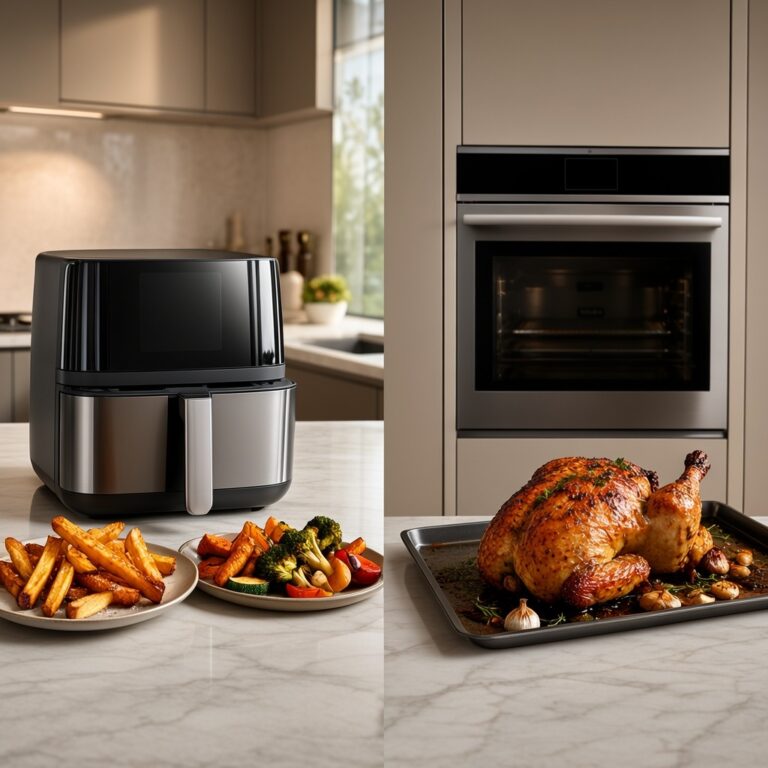
Oven-Style Air Fryers
Oven-style air fryers look more like small countertop ovens.
Depending on the model, they can offer additional functions such as:
- Air frying
- Baking
- Toasting
- Roasting
- Broiling
- Dehydrating
They can be a good option if you want one appliance to perform several kitchen tasks.
However, they typically require more counter space.
3. Consider Cooking Power
Wattage can give you an idea of how much electrical power an air fryer uses, but it should not be the only specification you consider.
Cooking performance also depends on the heating element, airflow, basket design, temperature control, and the amount of food inside the basket.
A more powerful appliance is not automatically better if its airflow or cooking design is poor.
Instead of choosing based only on wattage, look at the overall design and how the cooking area allows hot air to circulate.
4. Look at Temperature Controls
A good air fryer should give you enough temperature control for the foods you normally prepare.
Many models offer adjustable temperatures suitable for:
- Reheating
- Roasting
- Air frying
- Baking
- Cooking vegetables
- Cooking meat and poultry
Digital controls can make it easier to select precise temperatures and cooking times.
However, do not pay extra for complicated controls if you only need basic air frying.
Simple controls can be perfectly adequate for everyday use.
5. Preset Cooking Programs: Are They Worth It?
Many air fryers include presets for foods such as:
- French fries
- Chicken
- Fish
- Vegetables
- Frozen foods
- Steak
- Baking
Presets can be convenient, especially for beginners.
However, they should not be the main reason you choose an air fryer.
Cooking times can vary depending on the quantity and type of food, so you may still need to adjust the temperature or cooking time.
Think of presets as a convenience feature rather than a guarantee of perfect results.
6. Check the Basket and Cooking Surface
The shape of the basket can make a major difference.
A wider cooking surface can allow you to spread food into a more even layer, which can help hot air reach more of the food.
This is particularly important when cooking:
- French fries
- Chicken wings
- Vegetables
- Frozen snacks
- Breaded foods
Avoid assuming that a larger advertised capacity always means more usable cooking space.
When comparing models, look at the actual basket dimensions and shape whenever those measurements are available.
7. Make Sure It Is Easy to Clean
An air fryer that is difficult to clean can quickly become an appliance you stop using.
Before buying, check whether the basket and tray are removable and whether the manufacturer allows them to be cleaned in a dishwasher.
Also look for a design with fewer difficult-to-reach areas where food and grease can accumulate.
Easy cleanup is especially important if you plan to use your air fryer several times per week.
8. Consider Counter Space
Before buying a large air fryer, measure the space where you plan to use it.
Check:
- Width
- Depth
- Height
- Distance from cabinets
- Ventilation space
- Storage space
Remember that you may need to leave room around the appliance during operation.
A smaller model that fits comfortably may be more useful than a larger model that stays hidden in a cabinet.
9. What Features Should You Actually Pay For?
Some features are genuinely useful, while others are mainly conveniences.
Features Worth Considering
Look for:
- Removable basket
- Easy-to-clean cooking surface
- Adjustable temperature
- Adjustable timer
- Clear digital display
- Automatic shutoff
- Multiple cooking modes
- Good warranty coverage
More advanced models may also include dehydration, roasting, baking, or other cooking functions. Consumer Reports recommends considering these additional modes when they can replace the need for multiple countertop appliances.
Features You May Not Need
You may not need to spend extra money on:
- Excessive preset programs
- Complicated smart features
- Large touchscreens
- Voice controls
- Features you will rarely use
The goal is to buy an air fryer that makes cooking easier, not one with the longest feature list.
10. Air Fryer Safety Tips
Using an air fryer safely is just as important as choosing the right model.
Always follow the manufacturer’s instructions and avoid overcrowding the basket.
For meat, poultry, seafood, and other foods that require specific internal temperatures, use a food thermometer rather than relying only on appearance.
According to USDA guidance:
- Poultry should reach 165°F (74°C)
- Ground meat should reach 160°F (71°C)
- Fish should reach 145°F (63°C)
- Whole cuts of beef, pork, lamb, and veal should reach 145°F (63°C) with a 3-minute rest
The FDA also recommends using a food thermometer because color and texture are not reliable indicators of food safety.
For additional food safety guidance, you can consult the USDA air fryer food safety guide.
11. What Can You Cook in an Air Fryer?
One of the biggest advantages of an air fryer is its versatility.
You can prepare:
- Chicken wings
- Chicken breasts
- Fish
- Vegetables
- French fries
- Frozen snacks
- Meatballs
- Toasted sandwiches
- Reheated leftovers
- Some baked foods
If you want recipe inspiration, try our best air fryer chicken recipes for beginners or these 15 crispy air fryer snacks you can make in minutes.
For healthier meal ideas, you can also explore our healthy dinner recipes under 500 calories.
12. Common Air Fryer Buying Mistakes
Buying Too Small
A small air fryer may look convenient, but if you regularly cook for several people, you could end up making multiple batches.
Buying Too Large
The opposite can also be a problem. A huge air fryer can take up valuable counter space without providing much benefit if you usually cook small portions.
Choosing Based Only on Price
The cheapest model is not necessarily the best value.
Look at the basket design, controls, cleaning process, warranty, and overall usability.
Focusing Only on Wattage
Wattage is useful information, but it does not tell you everything about cooking performance.
Ignoring Cleaning
If cleaning the appliance is annoying, you may use it less often.
Overcrowding the Basket
Trying to cook too much food at once can reduce airflow and lead to uneven results. Cooking in batches may produce better results.
Air Fryer Buying Checklist
Before buying an air fryer, ask yourself:
☐ How many people do I normally cook for?
☐ How much counter space do I have?
☐ Do I prefer a basket or oven-style design?
☐ What foods will I cook most often?
☐ Is the basket large enough for my normal portions?
☐ Is the temperature adjustable?
☐ Is the basket easy to remove and clean?
☐ Do I actually need advanced cooking presets?
☐ Does the appliance have a reasonable warranty?
☐ Does the price fit my budget?
If you can answer these questions, you will have a much better idea of which air fryer is right for you.
Final Verdict: Which Air Fryer Should You Choose?
The best air fryer depends on your cooking habits rather than simply choosing the largest or most expensive model.
For one person or a small kitchen, a compact basket-style model may be enough. Couples and small families may prefer a medium-capacity air fryer, while larger households may benefit from a bigger model or an oven-style design.
If you are a beginner and want a simpler way to narrow down your options, check our complete guide to the best air fryer for beginners in 2026.
The key is to prioritize usable capacity, cooking performance, ease of cleaning, counter space, and the features you will actually use.
Choose based on your kitchen and cooking routine, and your air fryer is much more likely to become an appliance you use every day.